Meet the American who gave flight to football, Bradbury Robinson, college star threw first forward pass

Amid football’s horrific death toll, St. Louis University standout proved passing game could make the game better

By Kerry J. Byrne Fox News

Imagine the United States of America without football — our most popular sport and a cherished cultural spectacle. 

No Friday night lights, Saturday afternoon madness or Super Bowl Sunday

It nearly happened. Gruesome violence on the gridiron in the early 1900s spurred calls from pigskin prohibitionists to spike football.

Robinson threw the first forward pass, and then the first touchdown pass, in the history of football. 

His “Blue and White” beat Carroll College, 22-0, on Sept. 5, 1906, in Waukesha, Wisconsin

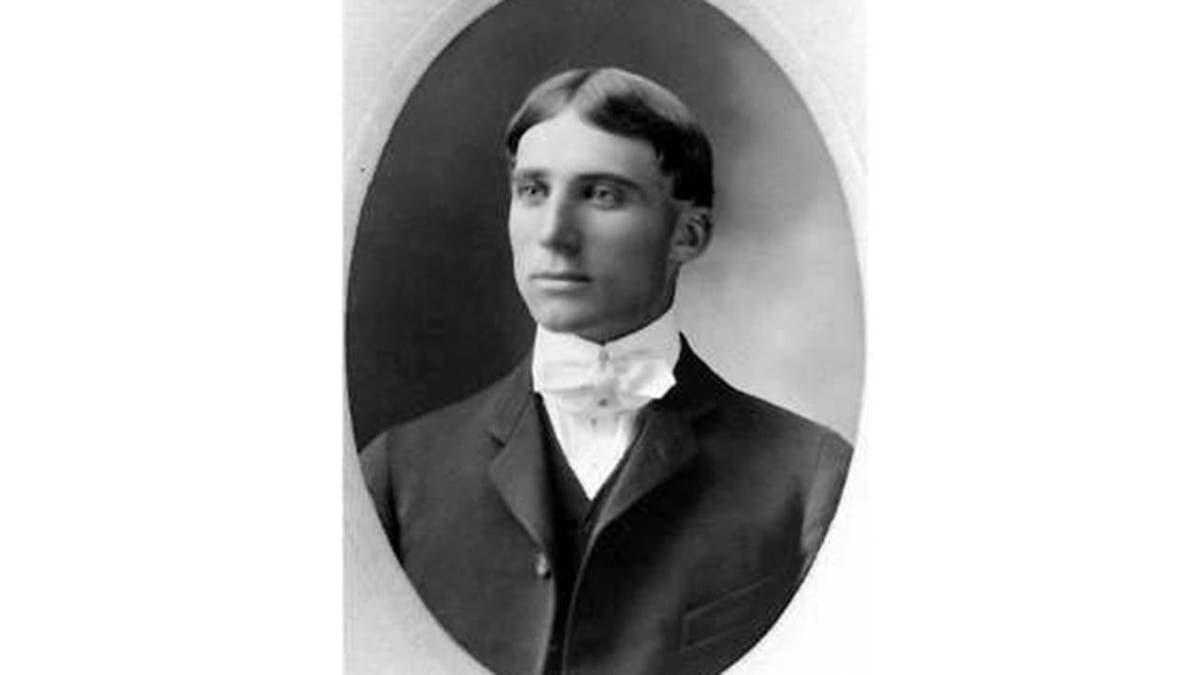
Pigskin pioneer Bradbury Robinson

Bradbury Robinson was a three-sport star and medical student at St. Louis University when he threw the first forward pass, and the first touchdown pass, in the history of football on Sept. 5, 1906. St. Louis University beat Carroll College 22-0, in a game played in Waukesha, Wisconsin.  (Public Domain)

“I had worked on forward passing, and at the time the pass was introduced I was the only finished passer in the country,” Robinson said while speaking about his role in sports history at a conference in 1947.

The forward pass was a regulatory Hail Mary — a longshot chance to save a sport that had grown wildly popular on high school and college campuses but too deadly for millions of Americans to tolerate.

“I had worked on forward passing, and at the time the pass was introduced I was the only finished passer in the country.”

President Theodore Roosevelt called an audible from the White House that launched a new era in the history of the sport — and in America’s cultural heritage.

“Football was incredibly brutal and violent at the turn of the century,” author and football historian John J. Miller told Fox News Digital. 
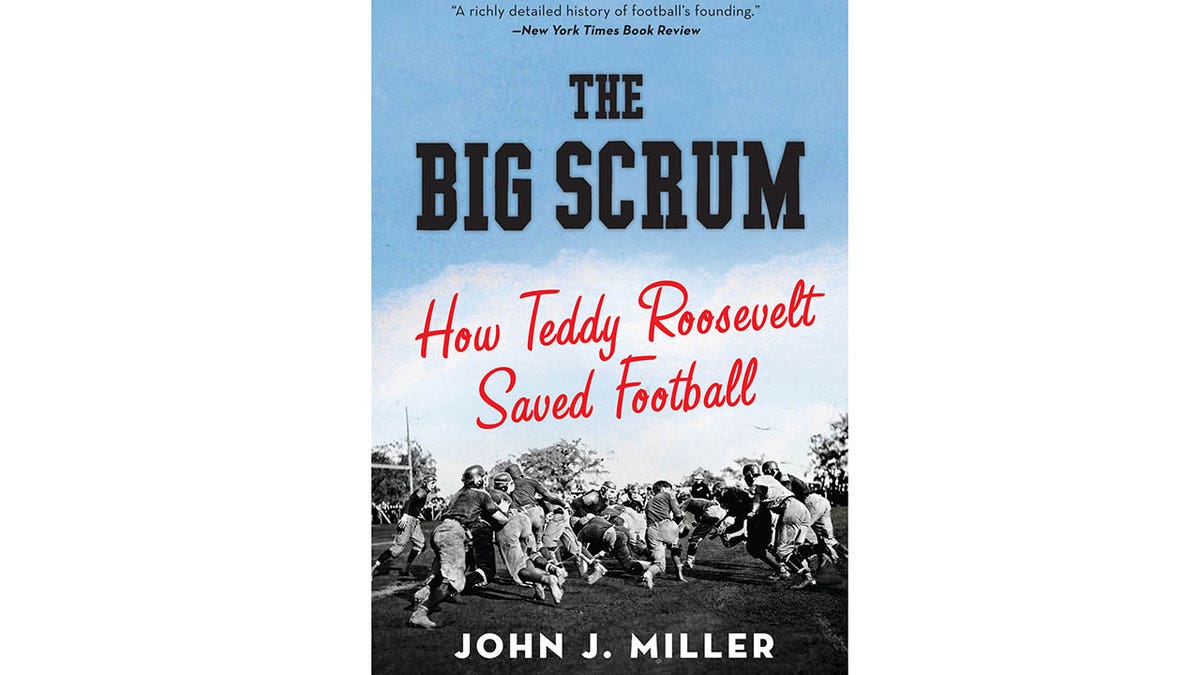
Football book

The Big Scrum: How Teddy Roosevelt Saved Football” by John J. Miller chronicles the high-powered effort to make football less deadly and more exciting. (Courtesy HarperCollins)

Miller is a journalism professor at Hillsdale College in Michigan and author of the 2011 book “The Big Scrum: How Teddy Roosevelt Saved Football.”

A total of 48 players were killed on the gridiron between 1900 and 1905, according to several sources.

“Brutality in playing a game should awaken the heartiest and most plainly shown contempt for the player guilty of it,” President Roosevelt said at the time. 

The First Football Fan called together college football rule-makers at the end of 1905 season. He demanded they find a way to make the sport safer to quell the anti-football uprising. 

The forward pass proved their most important innovation. 
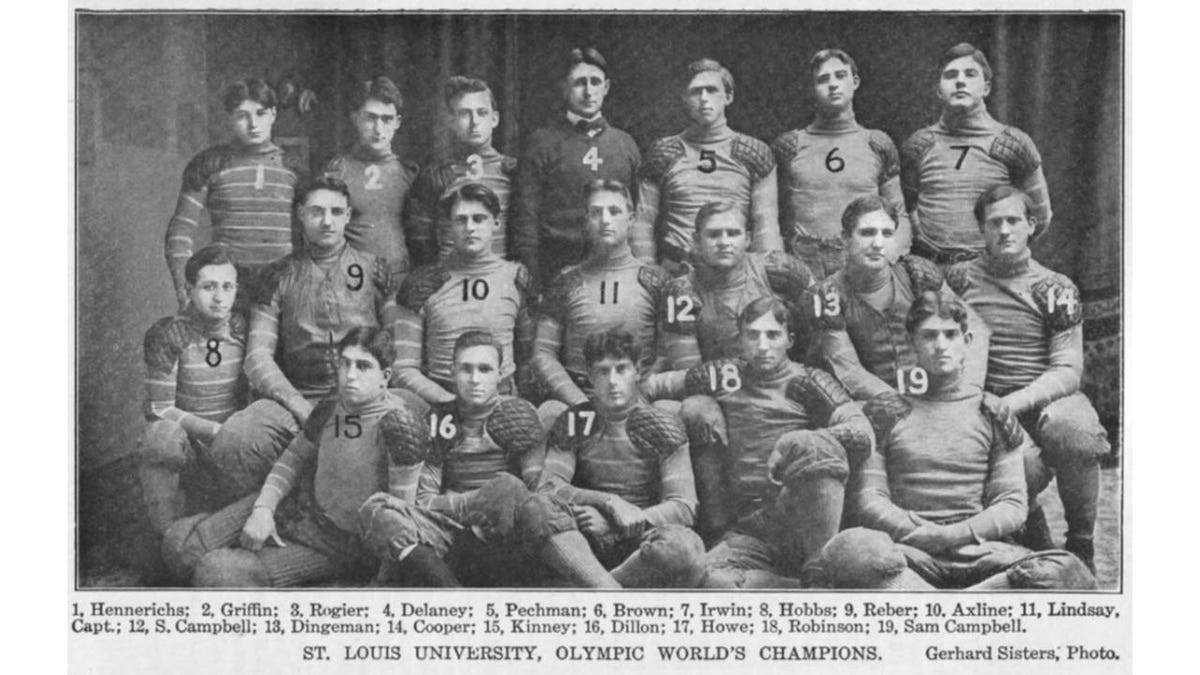
Olympic football team

Bradbury Robinson transferred from the University of Wisconsin to St. Louis University before the 1904 season. The powerhouse team participated in the 1904 Olympic Games in St. Louis, where they earned the distinction of the first and only gold medal “Olympic world’s champions” in American football. Bradbury Robinson, who threw the first forward pass in football history in 1906, is front row, second from right. (Public Domain)

“Without Roosevelt and the forward pass, what would have happened to football? Would the prohibitionists have won?” Miller said on NFL Films production “A Football Life: The Forward Pass.”

“Yes, they might have won. Football might have been abandoned. It might have been outlawed. It might have been erased from our cultural landscape.”

Intolerable death toll

Bradbury Norton Robinson Jr. was born on Feb. 1, 1884 in Bellevue, Ohio to Bradbury and Amelia Isabella (Lee) Robinson. 

The first football game, a duel between Princeton and Rutgers, had been played only 15 years earlier.

Dad “Brad” Sr. was a Civil War veteran from Massachusetts who spent much of his life working on railroads. Mom Amelia was born in England. 

The family moved to Wisconsin when the future pigskin pioneer was a child. 

He proved a star high school athlete and made his way to the University of Wisconsin, where he saw playing time with the varsity football team as a freshman in 1903. 

“Football might have been abandoned. It might have been outlawed. It might have been erased from our cultural landscape.” 

He was reportedly dismissed from the football team after an altercation with another student.

He enrolled in St. Louis University the following season. He became a star on one of the most dominant teams of what was then considered western football. 

Among other honors, St. Louis University holds the distinction of being the only team in history to win an Olympic gold medal in American football, according to university archivist Caitlin Stamm.
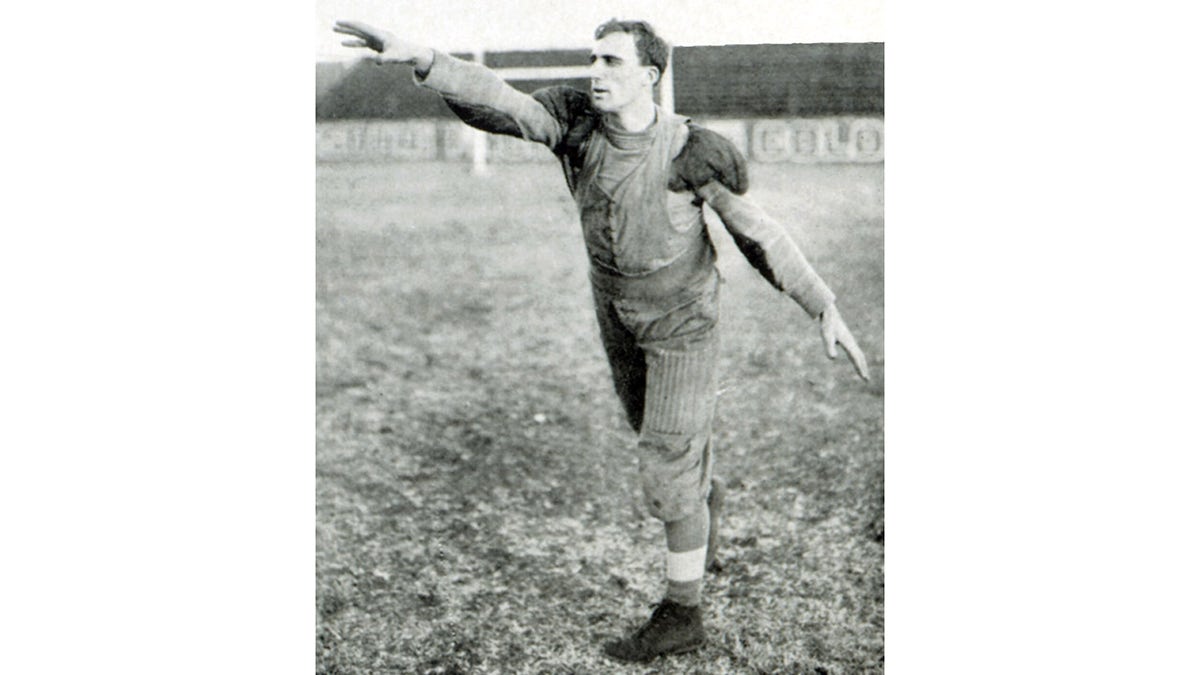
Bradley Robinson of SLU's Blue and White football team throws the "first" forward pass to John Schneider, in this reconstructed image of the first forward pass in collegiate football, Nov. 3, 1906. (Excerpted from a composite image on page 190 in the SLU Blue and White Yearbook for 1907.)

Bradley Robinson of SLU’s Blue and White football team throws the “first” forward pass to John Schneider, in this reconstructed image of the first forward pass in collegiate football, Nov. 3, 1906. (Excerpted from a composite image on page 190 in the SLU Blue and White Yearbook for 1907.) (Courtesy St. Louis University archives)

The 1904 Olympics were held in St. Louis that year, with American football, primarily a college game at the time, one of the featured sports.

St. Louis University went undefeated that year while the popularity of college football swept across the nation.

But the 1905 season that followed proved intolerably deadly: A shocking 18 high school and college football players were killed on the field of play.  

The cries to end the brutality and even ban the game presented political headwinds for the football-loving reformist president. 

“President Theodore Roosevelt, whose son was on the freshman team at Harvard University, made it clear he wanted reforms amid calls by some to abolish the college game,” Smithsonian Magazine reported in 2010. 
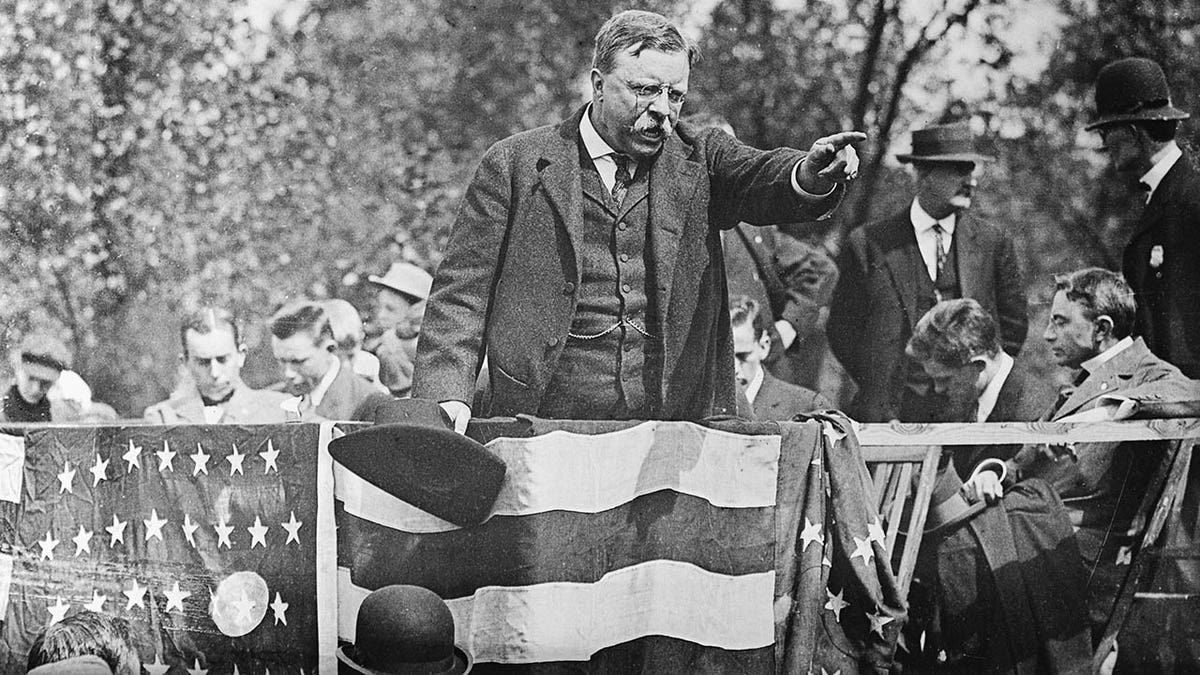
Teddy Roosevelt

Theodore Roosevelt standing on a podium pointing into the crowd during a campaign rally speech, circa 1900s (original caption).  (Getty Images)

University officials from across the nation met in New York City that December. 

Smithsonian Magazine added, “They made a number of changes, including banning the ‘flying wedge,’ a mass formation that often caused serious injury, created the neutral zone between offense and defense and required teams to move 10 yards, not 5, in three downs.”

It also said, “Their biggest change was to make the forward pass legal, beginning the transformation of football into the modern game.”

“President Theodore Roosevelt … made it clear he wanted reforms amid calls by some to abolish the college game.” 

Robinson reportedly got a heads-up on the pending rule changes from a family friend. 

Wisconsin Gov. Robert M. La Follette Sr., according to numerous accounts, shared with Robinson a letter from the president hinting at the potential of the forward pass a year earlier. 

Robinson became one of the first people in the nation to practice a new skill that backyard quarterbacks take for granted today: passing the pigskin.

Ball in the ‘shape of a watermelon’

St. Louis University brought in a new coach before that 1906 season: former Wisconsin assistant Eddie Cochems. 

The forward-thinking coach was only 29 and apparently knew Robinson from their days at the University of Wisconsin. The football star reportedly urged school authorities to hire the new coach. 
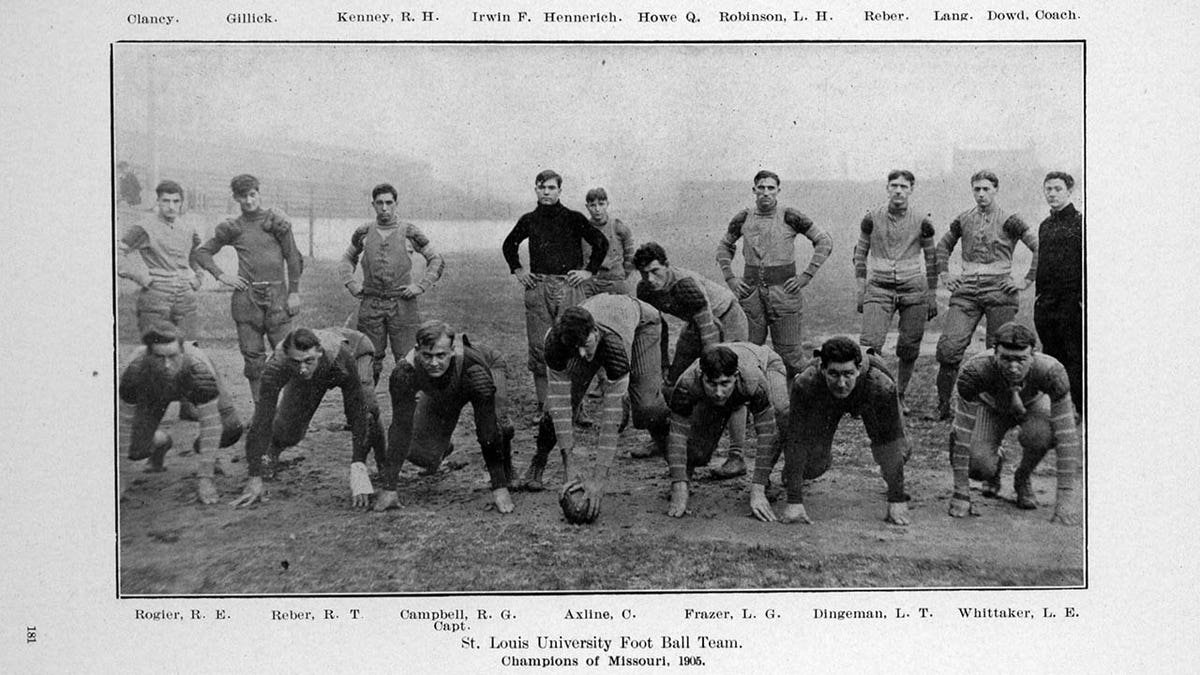
SLU football 1906

The 1906 St. Louis University football team was the first in history to take advantage of new rules and execute the forward pass. The team went 11-0 and outscored opponents 407-11. (Courtesy St. Louis University archives)

Their game plan to unleash the forward pass was formulated during a team retreat in Wisconsin.  

“Cochem brought a team of 16 players to Lakeview, Wisconsin, and used the time to train them on how to use the forward pass,” Stamm, the St. Louis University archivist, told Fox News Digital. 

Among other things, players had to learn to throw a spiral.

Robinson proved a natural. He was able to throw a football accurately 40 yards downfield, said Stamm. 

It was an incredible testament to his arm strength. 
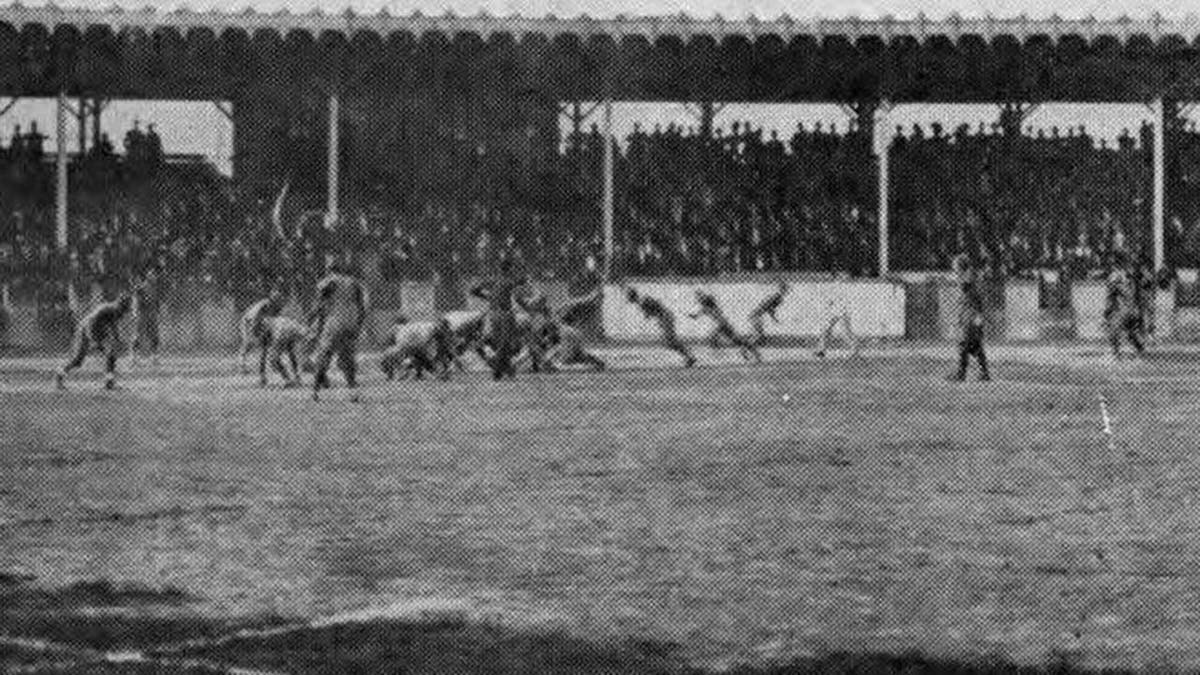
SLU vs. KU

St. Louis University wowed fans at Sportsman’s Park when Bradbury Robinson threw a 48-yard pass on Nov. 3, 1906, in a 34-2 win over Kansas University. Robinson had thrown the first forward pass, and first touchdown pass, in football history earlier that season in a 22-0 win over Carroll College. (Courtesy St. Louis University archives)

“The ball he would have thrown would have been the shape of a watermelon,” said Miller.

Cochems adapted faster than most coaches to the new rules changes.  

“Some of the new features are very acceptable,” he said in a preseason edition of the SLU publication Fleur de Lis. 

“The ball he would have thrown would have been the shape of a watermelon.” 

“I think that the quarterback kick and the forward-pass will develop many spectacular plays before the season closes.”

It took little time for his words to prove prophetic. 

St. Louis University opened the 1906 season on September 5 against Carroll College at the end of the summer retreat. 

It gave the Blue and White — SLU adopted its Billikens nickname five years later — a head start on history. Most programs would not play their first game until October.
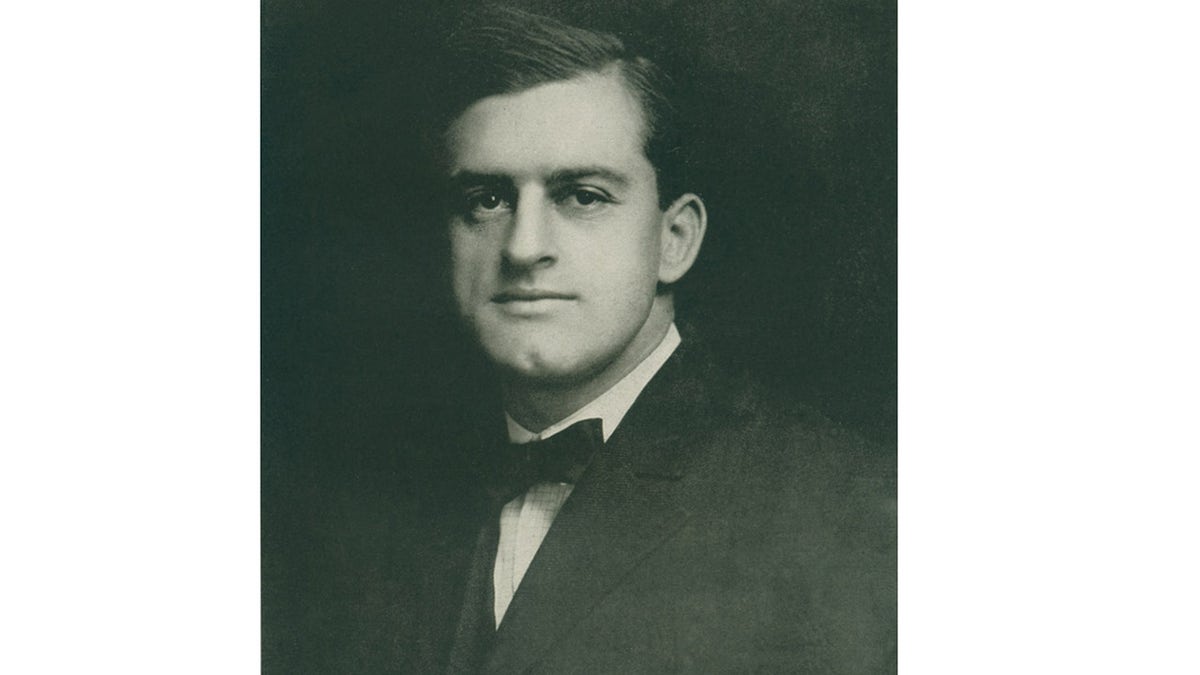
St. Louis University coach Eddie Cochems.

Eddie B. Cochems, Physical Education Instructor and Football Coach at Saint Louis University (1906) (Courtesy St. Louis University Archives)

The first pass in the history of football fell incomplete. It was a turnover by the rules of the time. 

Robinson’s second pass proved the potential for aerial fireworks ahead. He hit teammate Jack Schneider for a 20-yard score — the first touchdown pass in football history.

“Robinson was an end and I was a fullback. But Brad could throw the ball a long way, so we switched positions for that one play,” Schneider recalled 50 years later for the St. Louis Post-Dispatch. 

“We were told to run after the snap and just keep going until we heard the passer yell ‘hike’ or our name. So, I ran and ran. I was about to give up when I heard Robinson call. I turned and caught the ball a yard or so short of the goal and went over with it.” 
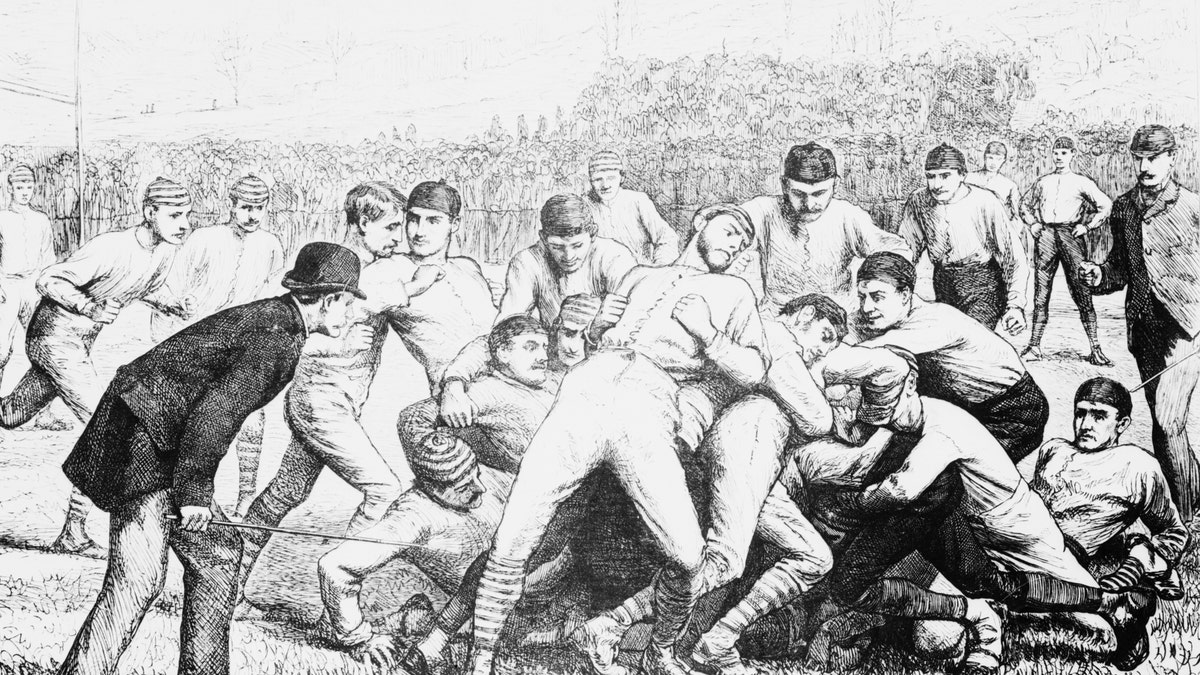
Football match between Yale and Princeton, 1879. Walter Camp was captain of the 1879 Yale football team. Drawing by A.B. Frost.

Football match between Yale and Princeton, 1879. Walter Camp was captain of the 1879 Yale football team. Drawing by A.B. Frost. (Getty Images)

“Somebody had to be the first. Somebody had to take the risk and show the football world what the forward pass could do,” author Miller said of the transformational moment in sports history. 

“I bet it was pretty exciting.”

Armed with a new weapon, the Blue and White went 11-0 and savaged opponents by a combined score of 407-11. 

The game of football was off and flying.

Robinson thrilled football fans later in the season with 48-yard completion against Kansas University. It was an unfathomable achievement in a sport that only one year earlier had been a deadly war of attrition. 

Football was taking off and flying.

A legend nearly lost

Bradbury Robinson died in Florida on March 7, 1949. He was 65 years old. 

He served as a captain in the U.S. Army in World War I, after his football heroics, and is buried at Arlington National Cemetery.

He enjoyed a distinguished career as a physician. Among other accomplishments, he worked in Europe after the war for U.S. Surgeon General Hugh S. Cumming. 

Robinson was also credited in the 1940s as one of the first medical professionals to alert the world of the dangers of insecticide DDT in agriculture.
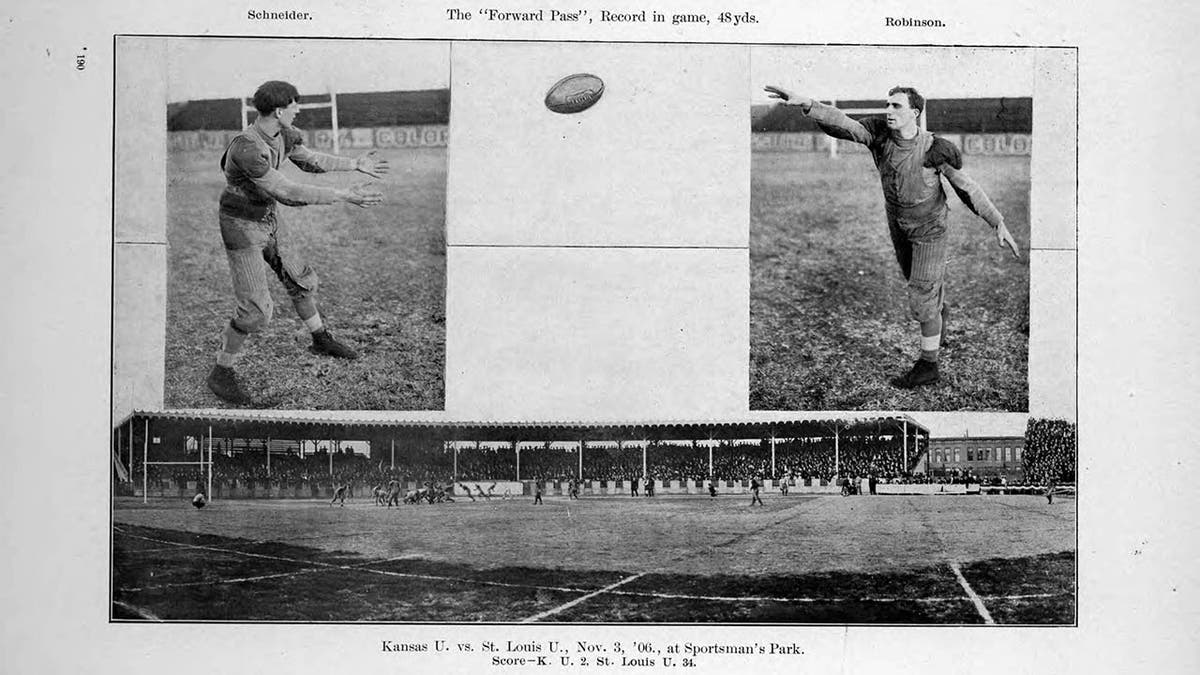
First forward pass

St. Louis University star Bradbury Robinson introduced the forward pass to football in 1906. SLU went 11-0 and stunned fans with a 48-yard pass against Kansas University. (Courtesy St. Louis University archives)

Robinson’s legacy as pigskin pioneer was nearly usurped by a legendary moment in football history. 

The forward pass enjoyed a public relations coup in 1913. A little-known Catholic school from Indiana used the tactic to shock an eastern power in front of New York City media at West Point.

“The forward pass made the game both safer – and more exciting.” 

Upstart Notre Dame smashed mighty Army, 35-13, as end and future coaching legend Knute Rockne caught two touchdown passes from Gus Dorais. 

“The Westerners flashed the most sensational football that has been seen in the East this year,” The New York Times wrote of the event, “baffling the cadets with a style of open play and perfectly developed forward pass, which carried the victors down the field at 30 yards a clip.”
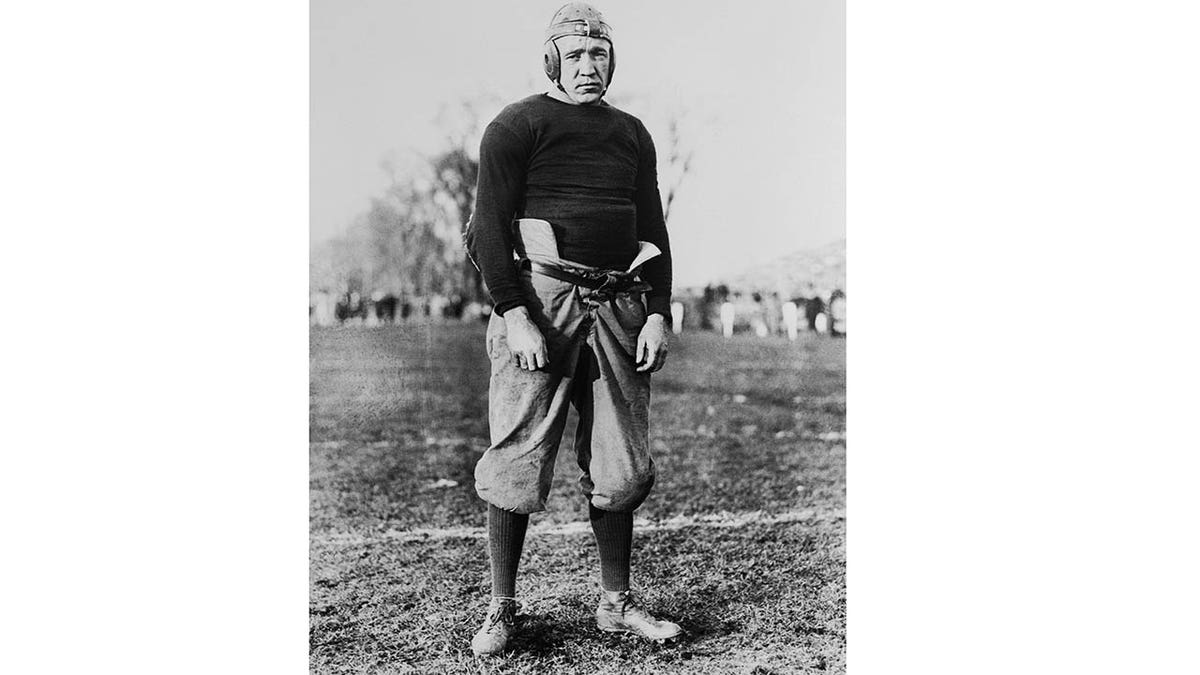
Knute Rockne

Knute Rockne is pictured here, as he appeared while he was captain of the Notre Dame football team. (Getty Images)

The forward pass perfected by small western schools had finally caught the attention of the eastern football establishment.

Notre Dame’s legend and affillation with the forward pass was cemented by the celebrated 1940 movie “Knute Rockne, All American,” starring Ronald Reagan

Yet the claim to fame rightly belongs to St. Louis University, a school of firsts, said archivist Stamm. 
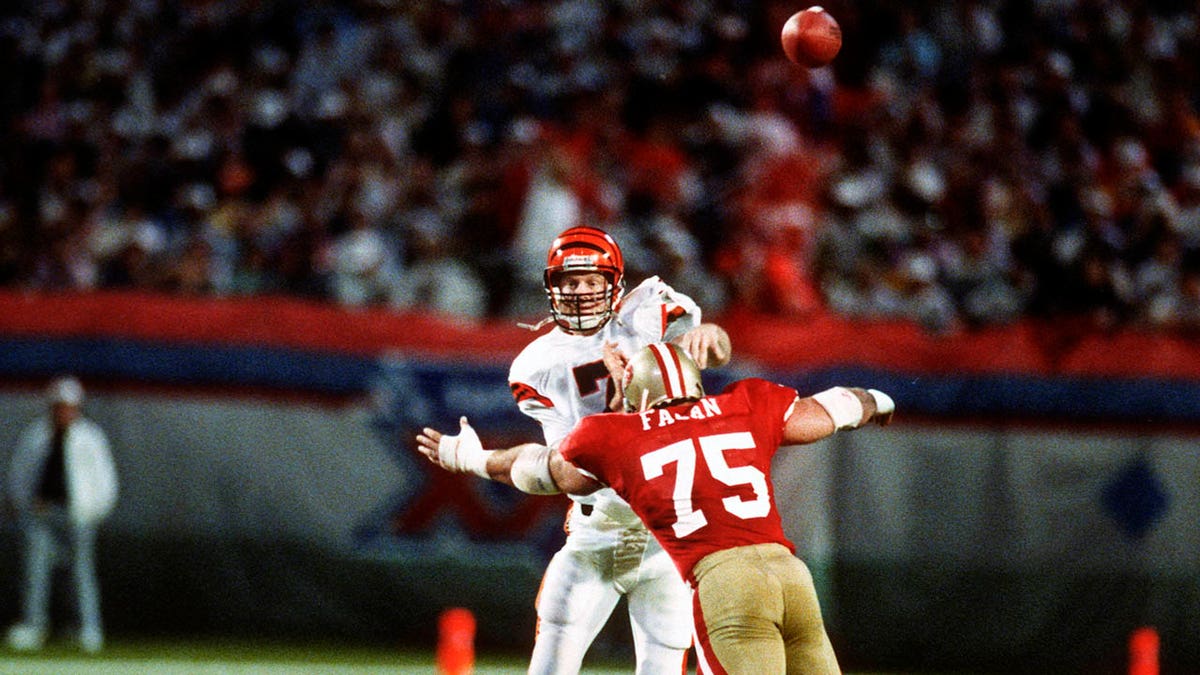
Boomer Esiason

Boomer Esiason, No. 7 of the Cincinnati Bengals, gets his pass off while under pressure from Kevin Fagan, No. 75 of the San Francisco 49ers, during Super Bowl XXIII on Jan. 22, 1989 at Joe Robbie Stadium in Miami, Florida. The 49ers won that Super Bowl 20-16.  (Focus on Sport/Getty Images)

The institution, she noted, was both the first university and first medical school west of the Mississippi River; it was also the first federally recognized aviation school. 

“It’s a long tradition of excellence and firsts,” she said. “Even in a sport we don’t participate in anymore, the forward pass is still a part of our heritage.”

The forward pass, said Miller, made the game both safer and more exciting.

Former NFL quarterback and sports personality Boomer Esiason claims the forward pass made football a uniquely American game. 
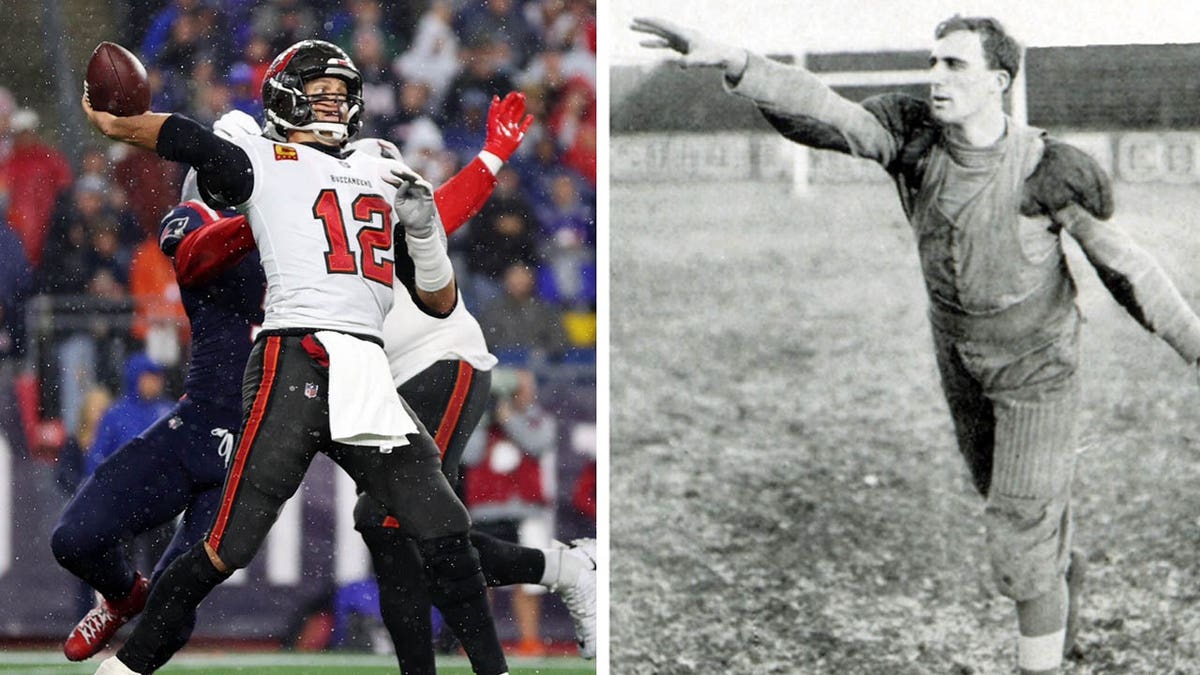
Brady and Robinson

Tom Brady attempted 12,050 passes in his legendary NFL career; Bradbury Robinson threw the first very football pass in 1906. (Maddie Meyer/Getty Images; Courtesy St. Louis University archives)

“Other countries don’t do this. They play rugby. They flip it back. They play soccer. They kick it,” Esiason said during the NFL Films production “A Football Life: The Forward Pass.”

“We Americans are all about freedom and liberty. We can flip it back. We can kick it. But more importantly, we can throw it. Nobody can throw it like an American.” 
Leave a comment

Filed under Uncategorized

Scientists create creepy lifelike faces with real human skin for robots

Future of robotics could include living skin for humanoid machines

By Kurt Knutsson, CyberGuy Report Fox News

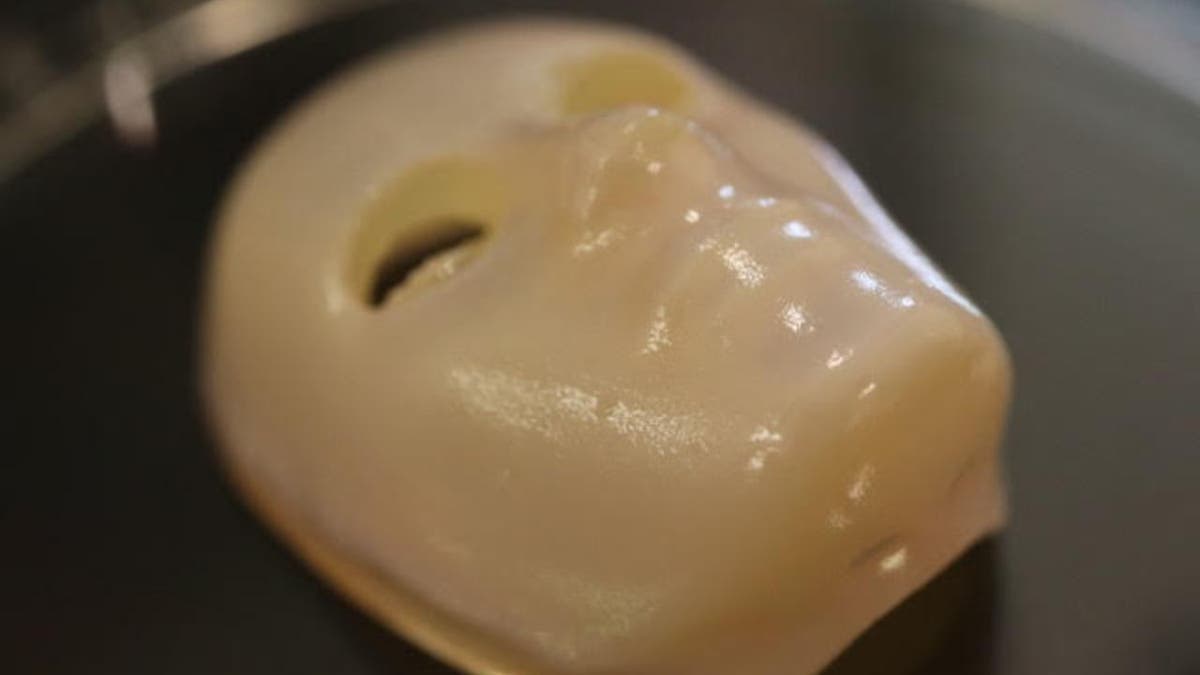
Researchers from the University of Tokyo have developed a groundbreaking method to cover robotic surfaces with genuine, living skin tissue. The idea of robots with skin isn’t just about creating a more lifelike appearance. This innovation opens up a world of possibilities, from more realistic prosthetics to robots that can seamlessly blend into human spaces. 

As we delve into the details of this research, we’ll uncover how these scientists are bridging the gap between artificial and biological systems, potentially revolutionizing fields ranging from health care to human-robot interaction.

Scientists create creepy lifelike faces with real human skin for robots

Engineered skin tissue (Shoji Takeuchi’s research group at the University of Tokyo) (Kurt “CyberGuy” Knutsson)

What’s the big deal?

We’re talking about robots that not only look human-like but also have skin that can heal, sweat and even tan. This isn’t just about aesthetics; it’s about creating robots that can interact more naturally with humans and their environment.

Scientists create creepy lifelike faces with real human skin for robots

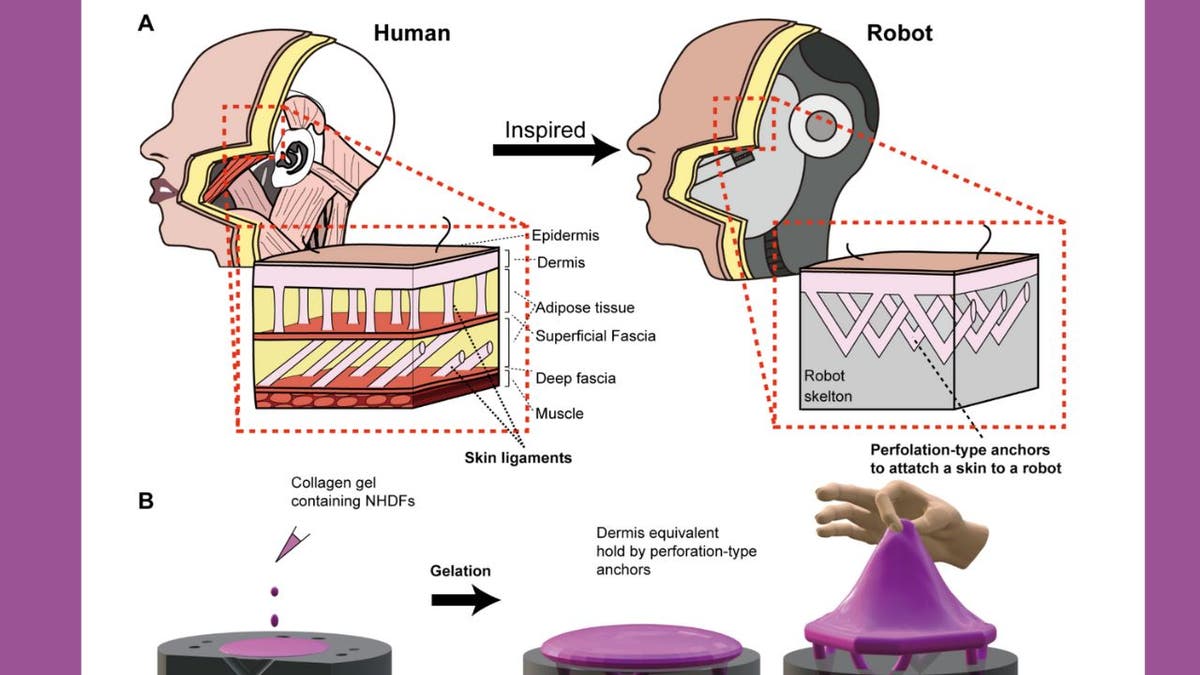
Illustration of the tissue-fixation method (Shoji Takeuchi’s research group at the University of Tokyo) (Kurt “CyberGuy” Knutsson)

How does it work?

The secret lies in something called “perforation-type anchors.” These clever little structures are inspired by the way our own skin attaches to the tissues underneath. Essentially, they allow living tissue to grow into and around the robot’s surface, creating a secure bond.

The researchers used a combination of human dermal fibroblasts and human epidermal keratinocytes to create this living skin. They cultured these cells in a carefully prepared mixture of collagen and growth media, allowing the tissue to mature and form a structure similar to human skin.

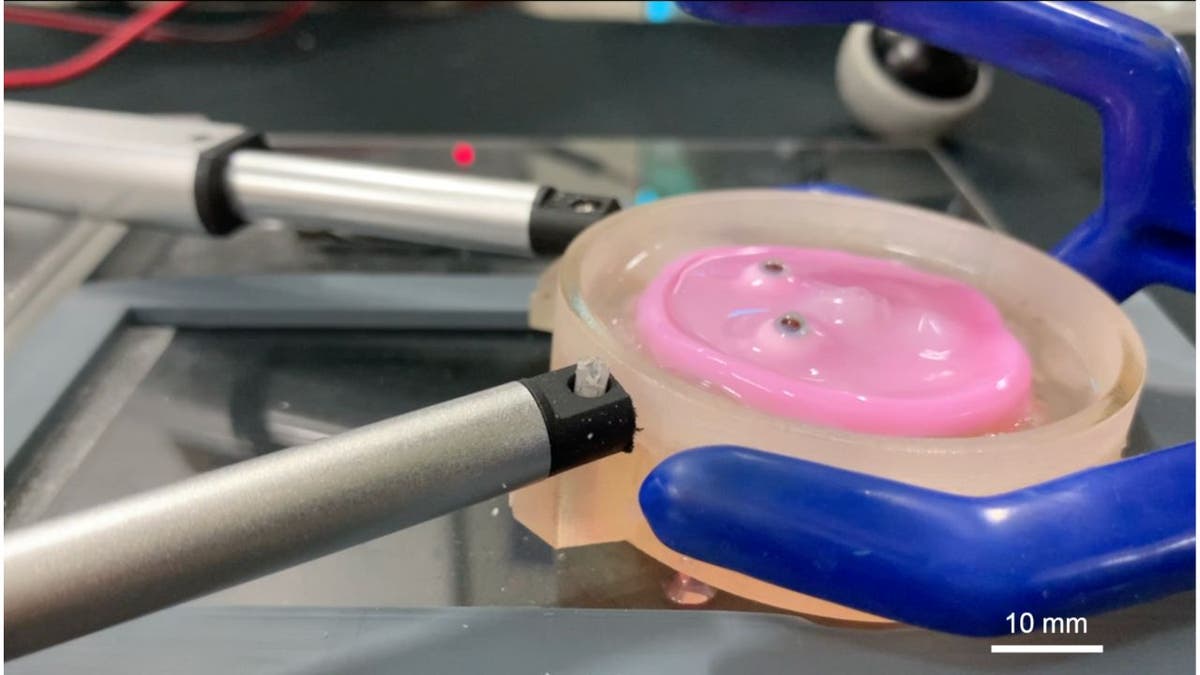
Scientists create creepy lifelike faces with real human skin for robots

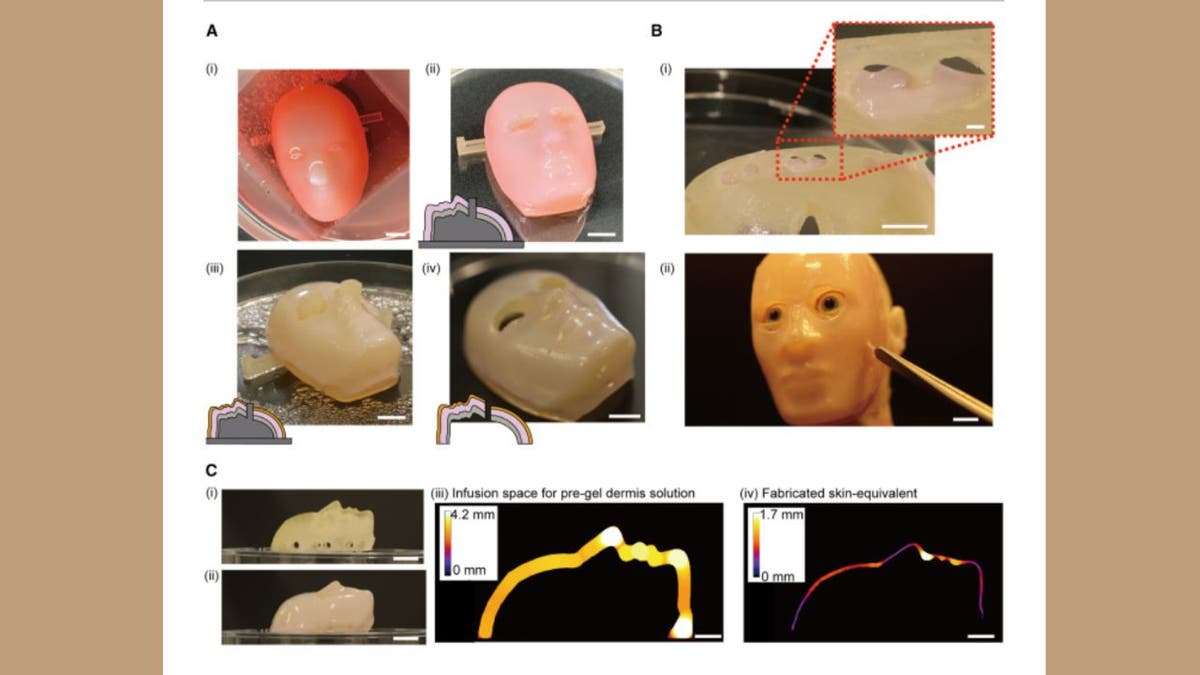
Evaluation of the perforation-type anchors to hold tissue (Shoji Takeuchi’s research group at the University of Tokyo) (Kurt “CyberGuy” Knutsson)

The minds behind the innovation

This groundbreaking research was conducted at the Biohybrid Systems Laboratory at the University of Tokyo, led by Professor Shoji Takeuchi. The team’s work is pushing the boundaries of what’s possible in robotics and bioengineering.

Scientists create creepy lifelike faces with real human skin for robots

Demonstration of the perforation-type anchors to cover the facial device (Shoji Takeuchi’s research group at the University of Tokyo) (Kurt “CyberGuy” Knutsson)

Building a face that can smile

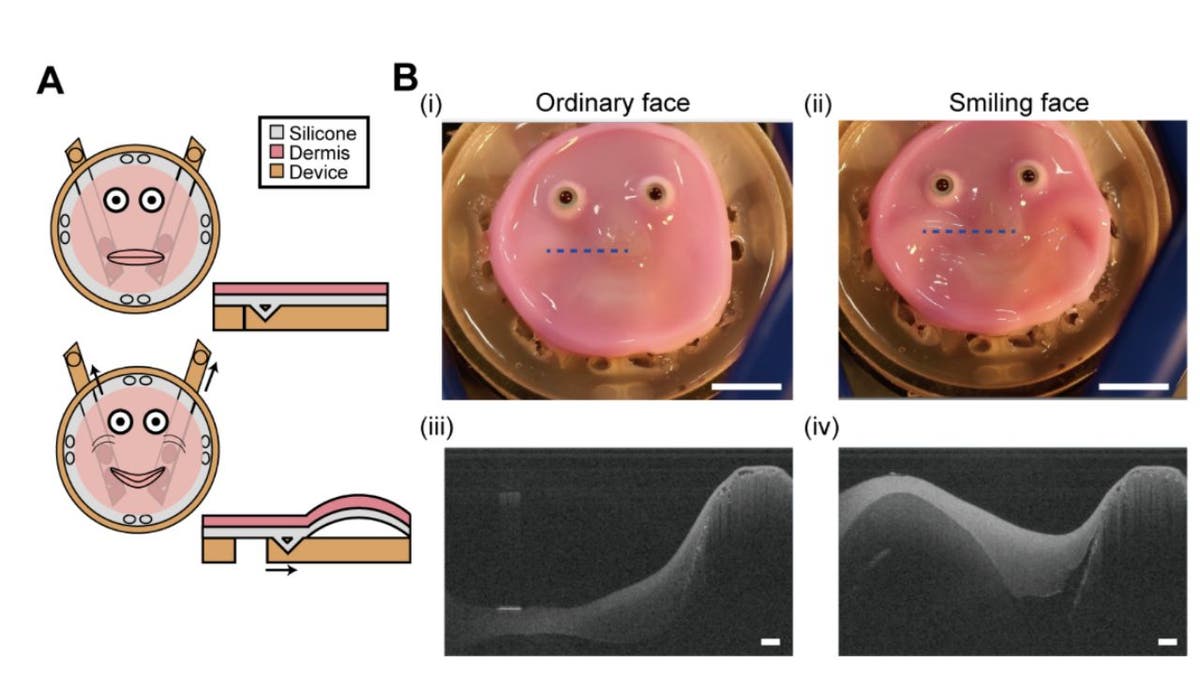
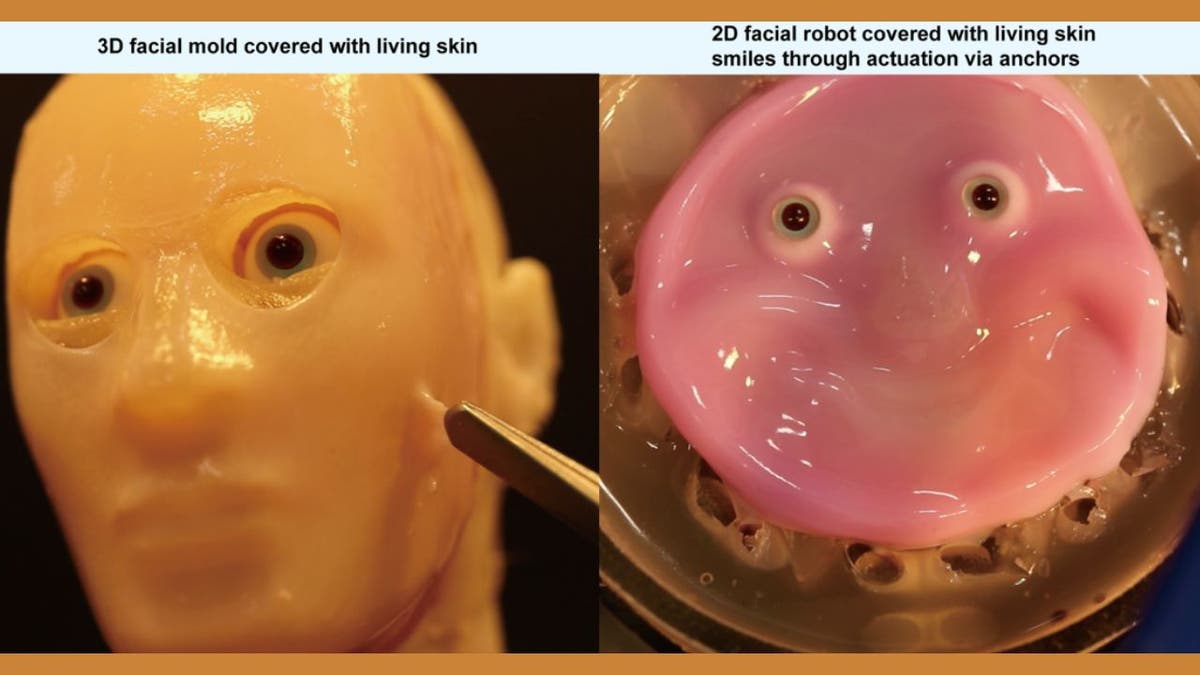
One of the coolest demonstrations of this technology is a robotic face covered with living tissue that can actually smile. The researchers created a system where the skin-covered surface can be moved to mimic facial expressions.

To achieve this, they designed a robotic face with multiple parts, including a base with perforation-type anchors for both a silicone layer and the dermis equivalent. This silicone layer mimics subcutaneous tissue, contributing to a more realistic smiling expression.

Scientists create creepy lifelike faces with real human skin for robots

The smiling robotic face (Shoji Takeuchi’s research group at the University of Tokyo) (Kurt “CyberGuy” Knutsson)

Challenges and solutions

Getting living tissue to stick to a robot isn’t as easy as it sounds. The team had to overcome issues like making sure the tissue could grow into the anchor points properly. They even used plasma treatment to make the surface more “tissue-friendly.”

The researchers also had to consider the size and arrangement of the anchors. Through finite element method simulations, they found that larger anchors provided more tensile strength, but there was a trade-off with the area they occupied.

Scientists create creepy lifelike faces with real human skin for robots

Engineered skin tissue (Shoji Takeuchi’s research group at the University of Tokyo) (Kurt “CyberGuy” Knutsson)

Why this matters

This technology could be a game-changer for fields like prosthetics and humanoid robotics. Imagine prosthetic limbs that look and feel just like real skin or robots that can interact with humans in more natural ways.

The ability to create skin that can move and express emotions opens up new possibilities for human-robot interaction. It could lead to more empathetic and relatable robotic assistants in various fields, from health care to customer service.

Scientists create creepy lifelike faces with real human skin for robots

The smiling robotic face (Shoji Takeuchi’s research group at the University of Tokyo) (Kurt “CyberGuy” Knutsson)

While we’re still a long way from seeing robots with fully functional living skin walking among us, this research from the University of Tokyo opens up exciting possibilities. It’s a step towards creating robots that blur the line between machines and living organisms.

As we continue to advance in this field, we’ll need to grapple with the technical challenges and ethical implications of creating increasingly lifelike machines. Future research might focus on improving the durability of living skin, enhancing its ability to heal or even incorporating sensory capabilities. One thing’s for sure: The future of robotics is looking more human than ever.

Leave a comment

Filed under Uncategorized

Meet the American who invented the shopping cart, Sylvan Goldman, Oklahoma supermarket mogul

Son of immigrant pioneers changed consumer culture amid Great Depression, Dust Bowl and looming world war

By Kerry J. Byrne | Fox News

One of the world’s greatest conveniences was conceived amid its greatest hardships. 

Sylvan Goldman, son of immigrant pioneers, invented the shopping cart. 

His brilliantly simple idea was born in Oklahoma during global economic calamity and as the Great Plains were recovering from ecological disaster.

“The simplest inventions are always the most fascinating,” Larry O’Dell, the state historian for the Oklahoma Historical Society, told Fox News Digital. 

“You wonder, ‘How was this not done before?’ It’s brilliant.”

The shopping cart is the ultimate symbol of American bounty and the richness of its consumer culture. 

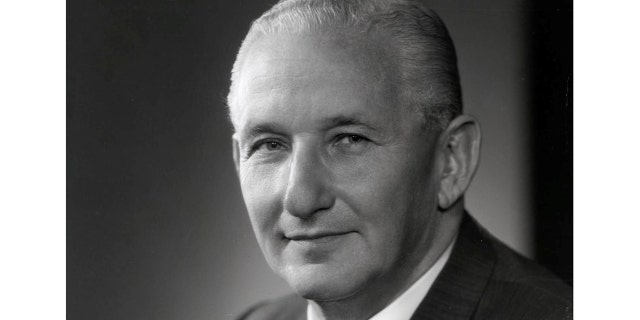
Sylvan Goldman

Oklahoma grocery store magnate Sylvan Goldman invented the shopping cart in 1936 — and went on to become a shopping-cart manufacturer and benefactor of many Oklahoma charities and institutions. (State Museum Collection, Sam Flood Collection, Oklahoma Historical Society)

Yet the shopping cart’s creator was born to a hardscrabble family of boomer Sooners in 19th-century Indian Territory — Oklahoma before it was Oklahoma.

Goldman introduced his ingenious innovation at his chain of Humpty Dumpty grocery stores across the state in 1937. 

His “invention of the shopping cart revolutionized merchandising and changed the face of America,” The Oklahoman newspaper wrote in tribute to the beloved native son the day after his death in 1984.

The mid-1930s seem a most unlikely time to revolutionize global consumer culture. 

The world was suffering through the Great Depression, imperial Japan was waging war in Asia and Hitler was about to unleash his frightening new blitzkrieg warfare upon Europe.

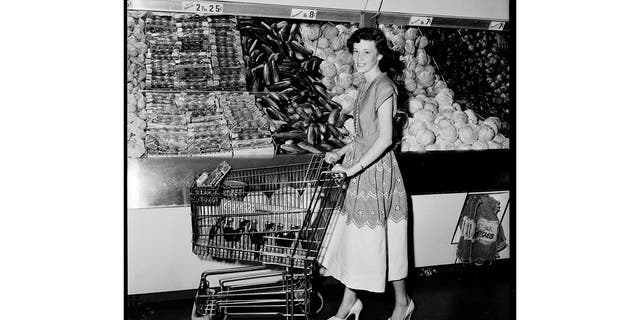
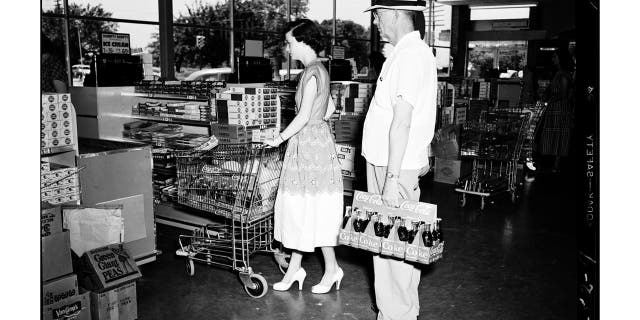
Sylvan Goldman shopping cart

Woman using a Sylvan Goldman shopping cart in use at a Humpty Dumpty grocery store.  (Meyers/Barney Hillerman Photographic Collection, Oklahoma Historical Society)

Goldman’s innovation before global conflict came in the immediate aftermath of another disaster. 

The infamous Dust Bowl, caused by years of drought and government land mismanagement, turned the rich topsoil of the Great Plains into arid desert sand in the 1930s.

“To the red country and part of the gray country of Oklahoma, the last rains came gently, and they did not cut the scarred earth,” John Steinbeck famously wrote in “The Grapes of Wrath,” his 1939 fictional American epic of hardened Okies escaping the Dust Bowl for California.

The world could not have appeared more ominous than it did in 1937. 

Yet hard times breed innovation, to quote a popular entrepreneurial aphorism. 

Perhaps it was the history of hardship that inspired Goldman, buoyed by his family’s pioneering spirit, to look at the world in a new, more optimistic way.

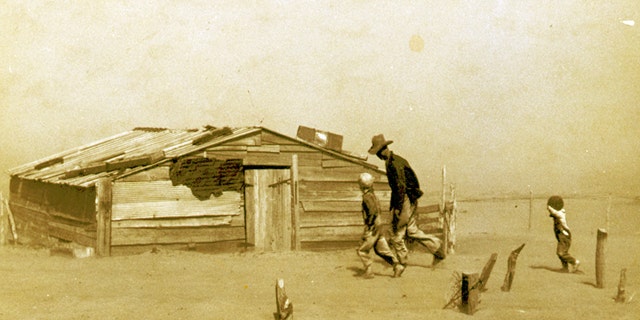
Dust Bowl

Farmer and sons walking in the face of a dust storm in Cimarron County, Oklahoma in the 1930s.  (Universal History Archive/UIG via Getty images)

“Goldman’s invention, the grocery shopping cart, made him a multi-millionaire and became the most used item on four wheels for public use, second only to the automobile,” croons the Oklahoma Hall of Fame.

Born of Sooner spirit

Sylvan Nathan “Syl” Goldman was born to an immigrant pioneer family on Nov. 15, 1898, in what was then the Chickasaw Nation. 

His birthplace is now part of Ardmore, Oklahoma, about 100 miles south of Oklahoma City. 

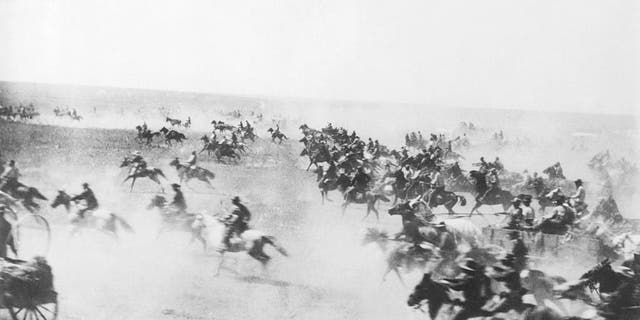
Boomers rush Oklahoma

The start of the Oklahoma Land Run at high noon as settlers rush to claim the Unassigned Lands, Oklahoma, April 22, 1889.  (Barney Hillerman/Underwood Archives/Getty Images)

His father, Michael Goldman, was born in Latvia. His mother, Hortense (Dreyfus) Goldman, hailed from Alsace-Lorraine, a war-torn wedge of Europe at various times part of Germany or France, depending upon the outcome of the most recent conflict. 

“His father, Michael Goldman, earlier had demonstrated initiative and ambition,” historian Terry P. Wilson wrote in his 1978 biography, “The Cart That Changed the World: The Career of Sylvan N. Goldman.”

The elder Goldman arrived in Baltimore, Maryland, in 1880 and obtained work in a dry goods store, establishing the family’s grocery-store trajectory. 

He moved west and in 1889 joined the famous land rush on what’s now Oklahoma. 

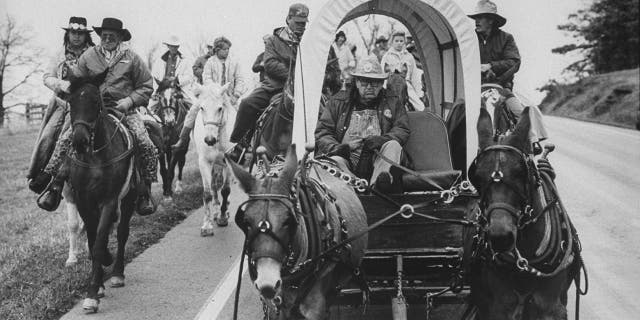
Trail of Tears

Trekkers in horse-drawn covered wagon and on horseback reenacting the Trail of Tears, 1,000-mile journey that Cherokees traveled 150 years ago. No location.     (Ed Lallo/Getty Images)

Goldman’s dad was among America’s most iconic pioneers: an original Sooner. 

The future supermarket magnate was a Latvian-French Jew, born and raised on land settled by the Five Tribes, the native peoples of the American southeast, at the end of the Trail of Tears.

“The Trail of Tears was hard on the Five Tribes,” O’Dell, the Oklahoma historian said. 

“It was even harder on their slaves.” 

The native tribes on the Trail of Tears — Cherokee, Chickasaw, Choctaw, Creek, Seminole — owned Black slaves of African descent. 

It’s a poignant statement of the complexity of race and culture in the American melting pot that refutes simplistic contemporary pop-culture binary narratives. 

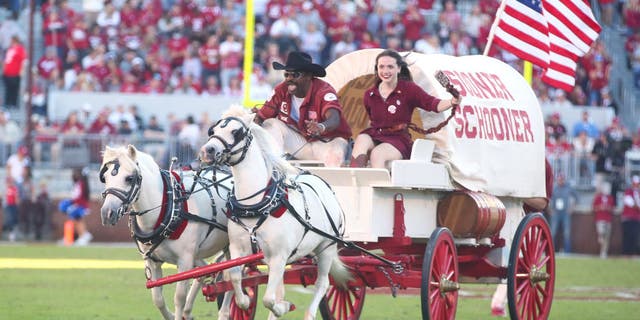
The Sooner Schooner

The University of Oklahoma recreates the Land Run of 1889 with the Sooner Schooner rushing the field before football games and after the Sooners score. (David Stacy/Icon Sportswire via Getty Images)

People of global heritage and race settled the Indian Territory together. The natives and Africans were followed by the Boomer Sooners — primarily European-Americans and recent European immigrants. 

Goldman grew up a rare Jew in a multiracial but overwhelmingly Christian society. He attended school only through the eighth grade. 

“He learned the retail store business from working in the family dry goods store in Ardmore, Oklahoma,” reports the website of Oklahoma City, where Goldman spent most of his life.

Goldman soon answered the call of Uncle Sam, enlisting in the U.S. Army with his boyhood pals on April 25, 1917 — just 19 days after the nation declared war on Germany.

The patriot Goldman, then only 18, lied about his birthday to meet the then-21 age of enlistment. 

Goldman’s knowledge of the food industry earned him a job as a mess cook.

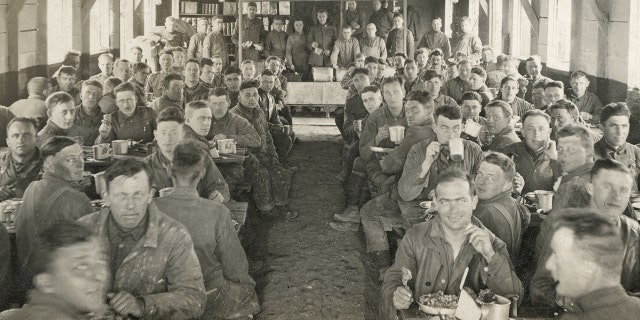
“Sergeant Goldie” in the summer and fall of 1918 fed doughboys on the front lines of Saint-Mihiel and in the decisive American-led campaign on the Argonne Forest that earned the Allies victory in World War I

US doughboys eating

World War I, Interior of an American barracks at Lux (Côte-d’Or, France). In 1918.  (adoc-photos/Getty Images)

His work securing supplies from local sources was enhanced by the French he learned from his mother. 

“Goldman tackled the myriad tasks of preparing food for 200 men under all kinds of conditions with the good humor and determination that characterized his later business activities,” Wilson wrote in his Goldman biography.

Goldman entered the grocery store business in Texas with his brother Alfred immediately after the war.

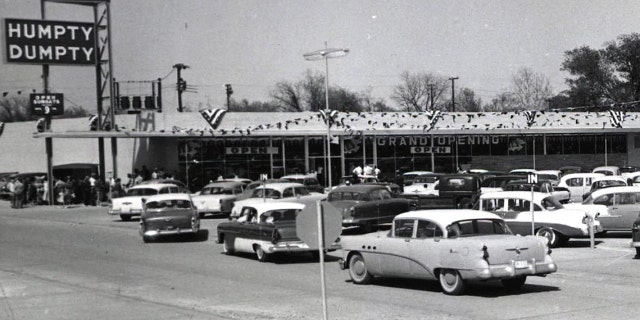
Grocery store in Oklahoma

Humpty Dumpty Grocery Store grand opening in Ardmore, Oklahoma, circa 1950s. Sylvan Goldman purchased the faltering grocery chain in the 1930s and turned it into a success with inventions such as the shopping cart. (Oklahoma Historical Society)

The Goldman boys enjoyed various degrees of success in Texas, California and Oklahoma before purchasing the struggling Humpty Dumpty chain of grocery stores in 1934. Alfred Goldman died in 1937. 

The lone Goldman brother changed the fortunes not only of Humpty Dumpty, but of consumer culture around the world with the shopping cart. 

He conceived of the idea in 1937, tooling around with it in his carpentry shop. 

His original shopping cart was slightly different than the all-in-one model we know today. 

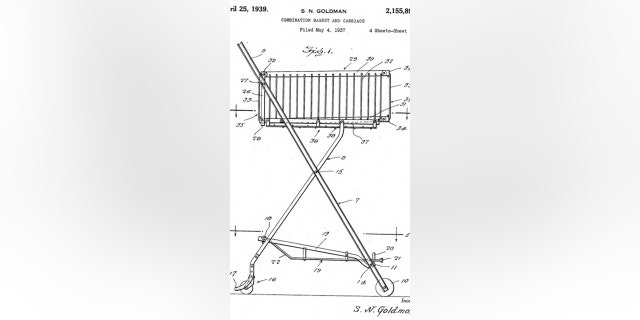
His “combination basket and carriage,” as he called it in the patent application, was a two-part unit. 

Sylvan Goldman shopping cart

Sylvan Goldman invented the shopping cart in 1937. He received the patent for his invention in 1939.  (U.S. Patent and Trademark Office/Public Domain)

It featured the typical wire shopping basket that could now be placed on his visionary addition, a collapsible frame with wheels.

Goldman himself must have been giddy with the thought.

He referred to his shopping basket and carriage as “ingenious” and a “broad inventive concept” in the patent application. 

It measured 24 inches long, 18 inches wide and 36 inches tall. 

“The baskets had to be removed when the cart was folded, but they were designed so they could be stacked and took up very little space. Goldman added a baby seat to his design a year later,” reports the National Center for Agricultural Literacy, which offers lesson plans to teach Goldman’s story to rural schoolchildren. 

Early shopping cart

A woman with her shopping cart checking out of an Oklahoma Humpty Dumpty store in 1951. Said O’Dell, the Oklahoma historian, of the shopping cart, “It’s hard to believe nobody thought of it before.” (Oklahoma Historical Society)

“The fact the shopping cart wasn’t invented until the mid-1930s just floored me,” said O’Dell, the Oklahoma historian.

“It’s hard to believe nobody thought of it before.”

Shopping carts rolled into Humpty Dumpty markets across Oklahoma on June 4, 1937. 

The public — naturally — hated the idea. 

Humpty Dumpty ad

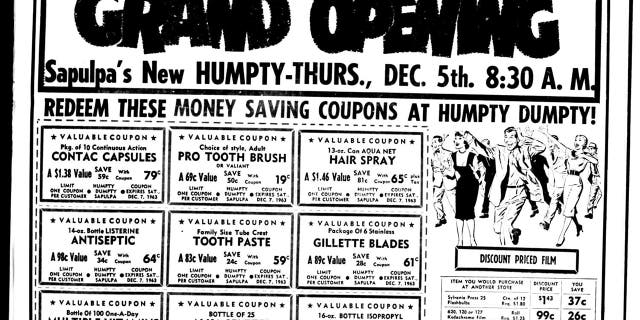
Advertisement promoting the opening of a new Humpty Dumpty grocery store in Sapulpa, Oklahoma, from the Sapulpa Daily Herald, Dec. 5, 1963. (Oklahoma Historical Society)

“I’ve pushed my last baby buggy,” women reportedly retorted, according to an oft-cited quote. 

Men also resisted “because pushing a cart didn’t feel ‘manly enough,’” The Oklahoman reported in a 2018 retrospective on the Sooner State creation. 

“I thought it would be an immediate success. I was so enthused about the cart and the advertising we had put around the cart being put on the market,” Goldman told CBS television reporter Charles Kuralt in a 1977 interview. 

“I went down to the store the next morning about 10 o’clock expecting to see people standing in line outside the store trying to get in.”

He was met not by crowds but by utter disappointment. 

“When I got there, there was ample room for me to get in. There were people shopping and not a one was using the cart.”

Humpty Dumpty grocery store

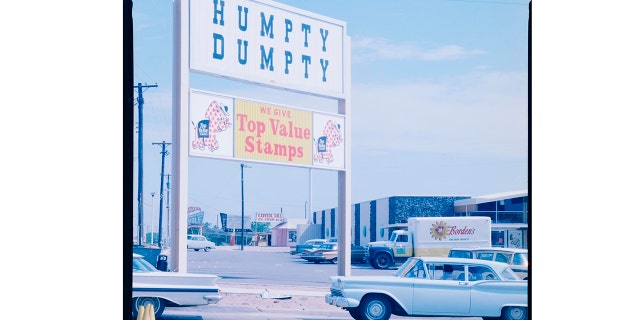
Sign outside a Humpty Dumpty grocery store in Oklahoma in 1964. (Oklahoma Historical Society)

Undaunted, Goldman turned to some classic marketing magic. He hired women of various ages to walk around near the entrance of each store, pretending to be shopping with their carts.

“Shills!” cracked Kuralt. 

“That’s right. Exactly what it was,” Goldman replied, smiling broadly and nodding his head. “When they’d seen the ones that were walking around using them, they started using them. And immediately it became a huge success.”

Sylvan Goldman died on Nov. 25, 1984 in Oklahoma City. 

His wife of 53 years, Margaret Katz Goldman, died only a week earlier. 

Shopping cart inventor Sylvan Goldman

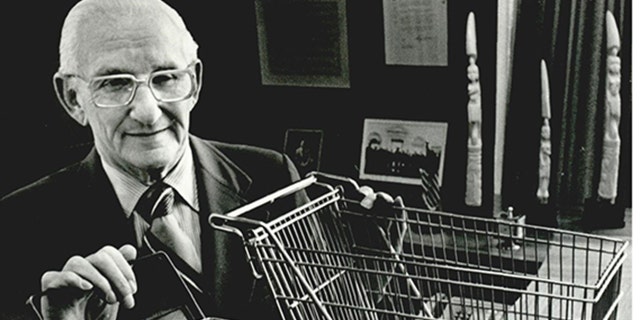
Sylvan Goldman, Oklahoma City supermarket magnate, pictured in 1976. Goldman invented the supermarket shopping cart in 1936.  (Don Tullous, courtesy Oklahoma Historical Society)

“Goldman’s shopping cart invention has been described by his biographer and others as the greatest development in the history of merchandising,” The Oklahoman wrote in its obituary the following day. 

“Goldman used the fortune he amassed from the cart and from a retail food chain to launch a vast business empire that includes savings and loan, banking, insurance and real estate development shopping centers, office buildings, hotels and thousands of acres of property across the United States.”

The Oklahoma Country Historical Society has an award named in his honor. 

He gifted the Oklahoma Blood Institute $1.5 million, which honors him with their lifesaving work today at the Sylvan N. Goldman Center. 

Amazon shopping cart

In this photo illustration, an Amazon logo is seen displayed on a smartphone along with a shopping cart.  (Rafael Henrique/SOPA Images/LightRocket via Getty Images)

Oklahoma City honors the businessman with Syl Goldman Park, located between South Independence Avenue and Interstate 44 near Will Rogers World Airport.

“With his wife Margaret, the Goldmans donated large buildings and small statues and provided major support for education, the Oklahoma Blood Institute, and the arts and humanities,” the city website proclaims. 

His legacy is most notable in his prized shopping carts, so ubiquitous we hardly notice them today and really can’t imagine a world without them. 

Industry estimates vary, but several sources say that about 100,000 grocery stores and supermarkets across the United States carry an average of about 200 to 250 shopping carts — a total of up to 25 million shopping carts. 

At any given time, 15 million shopping carts are rolling across the aisles of American markets, according to several estimates, while millions more are used daily around the world.

Shopping cart inventor Goldman

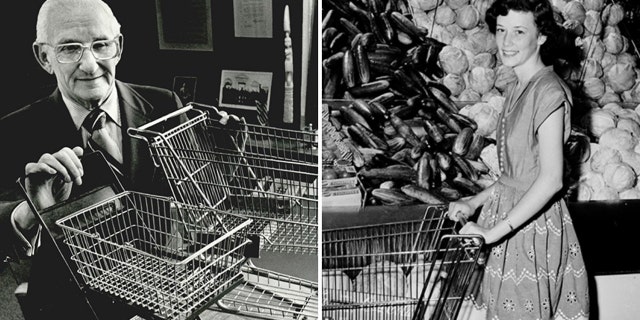
Sylvan Goldman, left, invented the shopping cart in 1937; shown on the right is a shopper at one of his Humpty Dumpty stores in Oklahoma in the 1950s.  (Courtesy Oklahoma Historical Society)

The digital consumer industry has even adopted the term first applied to Goldman’s wire and wheel invention.

Global consumers place items in their Amazon or other online shopping cart by the hundreds of millions each day.

“If there were no shopping carts, nothing to roll our children and our Campbell’s soup around the store in, what would become of us?” Kuralt asked viewers in his 1977 interview with Goldman. 

“There might never have been a supermarket. There might never have been a giant economy-sized Kellogg’s Rice Krispies. It boggles the mind.”

“Goldman,” The Oklahoman wrote in its obituary, “was the epitome of the immigrant’s son who worked hard and risked much to build a business.”

Kerry J. Byrne is a lifestyle reporter with Fox News Digital.

Leave a comment

Filed under Uncategorized

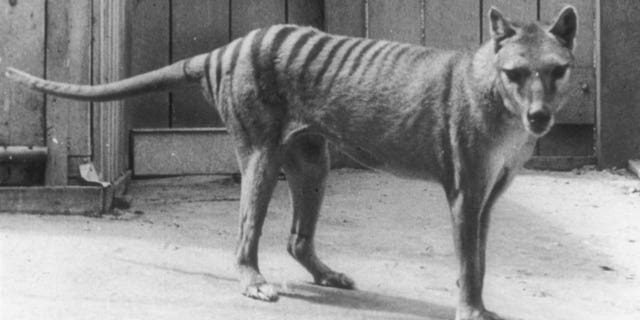
Scientist want to resurrect the extinct Tasmanian tiger

The last Thylacine died in 1936 in Tasmania

Nearly 100 years ago, the last Tasmanian tiger died, ending the reign of a species that dates back to 1000 BC. Now scientists are looking to bring them back from the dead. 

Known as Thylacine, the carnivorous marsupial once roamed the Australian outback before the last known survivor of the striped species died in 1936. Scientists now plan to use genetic technology, ancient DNA collection, and artificial reproduction to bring the tiger back. 

“We would strongly advocate that first and foremost we need to protect our biodiversity from further extinctions, but unfortunately we are not seeing a slowing down in species loss,” said Andrew Pask, a professor at the University of Melbourne leading the project at the Thylacine Integrated Genetic Restoration Research Lab. 

“This technology offers a chance to correct this and could be applied in exceptional circumstances where cornerstone species have been lost.”

The last Tasmanian Tiger, named Benjamin, went extinct in 1936 not long after his species had been granted a protective status. 

The last Tasmanian Tiger, named Benjamin, went extinct in 1936 not long after his species had been granted a protective status.  (Getty Images)

The thylacine project is working with technology investor Ben Lamm’s Colossal Biosciences and Harvard Medical School geneticist George Church. Lamm’s organization has also launched a $15 million project to bring the woolly mammoth back from extinction. 

The last living thylacine was named Benjamin and died in 1936 at the Beaumaris Zoo in Tasmania, shortly after the animal species had been given protected status. 

The team plans to first design a genome for the tiger and compare it to the dunnart, its closest living relative. Scientists will then use CRISPR gene editing technology to eventually create an embryo.

“We then take living cells from our dunnart and edit their DNA every place where it differs from the thylacine. We are essentially engineering our dunnart cell to become a Tasmanian tiger cell,” Pask claimed. 

The researcher concluded, “With this partnership, I now believe that in ten years’ time we could have our first living baby thylacine since they were hunted to extinction close to a century ago.”

Leave a comment

Filed under Animals, Uncategorized

Scientists claim to find dinosaur remains from day of asteroid strike: report

The remains were found at North Dakota’s Tanis dig site.

Scientists claim to have found the remains of a dinosaur that was killed on the day a massive asteroid struck Earth 66 million years ago. 

The dinosaur leg was reportedly preserved as debris from the impact rained down.

“We’ve got so many details with this site that tell us what happened moment by moment, it’s almost like watching it play out in the movies. You look at the rock column, you look at the fossils there, and it brings you back to that day,” Robert DePalma, the University of Manchester graduate student who leads the Tanis dig in North Dakota, told BBC News on Wednesday.

The network has spent three years filming there for a show that’s set to air in just over a week.

Along with the leg, researchers said they found fish, a fossil turtle, small mammals, skin from a triceratops, the embryo of a flying pterosaur and a fragment from the asteroid.

The network said the remains have been jumbled together, with spherules linked to the impact site off the Yucatan Peninsula. 

Particles from tree resin contained inclusions that “imply an extra-terrestrial origin.”

Professor Paul Barrett, from London’s Natural History Museum, looked at the leg and deemed the dinosaur a scaly Thescelosaurus.

The limb, he noted, looks like it was “ripped off really quickly,” suggesting that the creature died “more or less instantaneously.” 

The question remains: Did it actually die on the exact day? 

One professor told the BBC he wants to see more peer-reviewed articles and additional independent assessments. 

“Those fish with the spherules in their gills, they’re an absolute calling card for the asteroid. But for some of the other claims – I’d say they have a lot circumstantial evidence that hasn’t yet been presented to the jury,” professor Steve Brusatte, from the University of Edinburgh, said. 

Julia Musto is a reporter for Fox News Digital. You can find her on Twitter at @JuliaElenaMusto.

1 Comment

Filed under Animals, Humor and Observations

T. Rex might actually be three separate species: study

The controversial study looked at a dataset of 37 specimens.

The iconic Tyrannosaurus rex, or “T. Rex,” might need to be re-categorized into three distinct species, according to researchers. 

The Tyrannosaurus rex is the only recognized species of the group of dinosaurs Tyrannosaurus to date – though previous research has reportedly acknowledged variation across Tyrannosaurs skeletal remains. 

In a controversial new study published Tuesday in the peer-reviewed journal Evolutionary Biology, South Carolina and Maryland paleontologists conducted an analysis of skeletal remains they said reveal physical differences in the femur and other bones and dental structures. 

Based on a dataset of 37 specimens, the group looked at the robustness in the femur of 24 specimens and measured the diameter of the base of teeth or space in the gums to assess if specimens had one or two slender teeth resembling incisors. 

According to an accompanying release, the scientists observed that the femur varied across specimens, with two times more robust femurs than svelte ones across specimens. Robust femurs were also found in some juvenile specimens and “gracile” femurs were found in some that were full adult size, suggesting that variation is not related to growth. 

Dental structure also varied and those with one incisorform tooth were correlated with often having higher femur gracility.

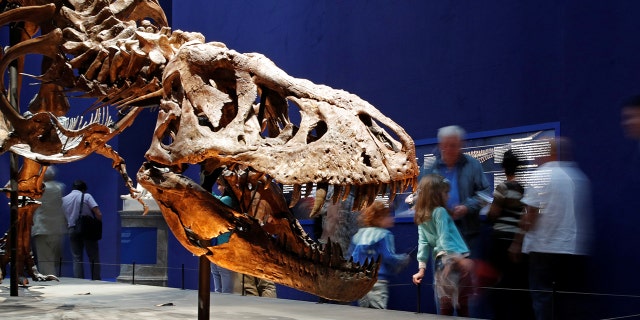
Visitors look at a 67 million year-old skeleton of a Tyrannosaurus Rex dinosaur, named Trix, during the first day of the exhibition "A T-Rex in Paris" at the  French National Museum of Natural History in Paris, France, June 6, 2018. 

Visitors look at a 67 million year-old skeleton of a Tyrannosaurus Rex dinosaur, named Trix, during the first day of the exhibition “A T-Rex in Paris” at the  French National Museum of Natural History in Paris, France, June 6, 2018.  (REUTERS/Philippe Wojazer)

They explained the Tyrannosaurus specimens “exhibit such a remarkable degree of proportional variations, distributed at different stratigraphic levels, that the pattern favors multiple species at least partly separated by time; ontogenetic and sexual causes being less consistent with the data.”

“Variation in dentary incisiform counts correlate with skeletal robusticity and also appear to change over time,” the authors noted. 

28 specimens could be identified in distinct layers of sediment at the Lancian upper Maastrichtian formations in North America – which was estimated to be from between 67.5 to 66 million years ago – and the paleontologists compared Tyrannosaurus specimens with other theropod species found in lower layers of sediment.

Only robust Tyrannosaurus femurs were found in the lower layer of sediment – and variation was not different to that of other theropod species – which the release said indicates that just one species of Tyrannosaurus likely existed at this point. 

However, the variation in Tyrannosaurus femur robustness in the top layer of the sediments was higher, suggesting the specimens had physically developed into more distinct forms and other dinosaur species. 

“We found that the changes in Tyrannosaurus femurs are likely not related to the sex or age of the specimen,” lead author Gregory Paul said in a statement. “We propose that the changes in the femur may have evolved over time from a common ancestor who displayed more robust femurs to become more gracile in later species. The differences in femur robustness across layers of sediment may be considered distinct enough that the specimens could potentially be considered separate species.”

Based on that evidence, the researchers said three morphotypes – what Science Direct defines as any of a group of different types of individuals of the same species in a population – and two additional species of Tyrannosaurus were “diagnosed” and named. 

“One robust species with two small incisors in each dentary appears to have been present initially, followed by two contemporaneous species (one robust and another gracile) both of which had one small incisor in each dentary, suggesting both anagenesis and cladogenesis occurred,” they continued. 

Evolution can take place by anagenesis, in which changes occur within a lineage. Whereas, in cladogenesis, a lineage splits into two or more separate lines.

The authors nominated two potential species: “Tyrannosaurus imperator” and “Tyrannosaurus regina.”

Tyrannosaurus imperator relates to specimens found at the lower and middle layers of sediment, with more robust femurs and usually two incisor teeth.

Tyrannosaurus regina is linked to specimens from the upper and possibly middle layers of sediment, with slenderer femurs and one incisor tooth. 

The Tyrannosaurus rex was identified in the upper and possibly middle layer of sediment, with more robust femurs and only one incisor tooth. 

The authors acknowledged that they cannot rule out that variation is due to extreme individual differences, or atypical sexual dimorphism, rather than separate groups. They also cautioned that the location within sediment layers is not known for some specimens. 

Reaction to the study from scientists has been largely skeptical, with some claiming the paper does not have enough evidence to reach its conclusions – and raising concerns over some of the specimens included in the study to National Geographic. 

Paul told The New York Times on Feb. 28 that he knows his proposal is provocative. 

“I’m aware that there could be a lot of people who aren’t going to be happy about this,” he told the publication. “And, my response to them is: Publish a refutation.”

Julia Musto is a reporter for Fox News Digital. You can find her on Twitter at @JuliaElenaMusto.

Leave a comment

Filed under Animals, Humor and Observations

UK archeologists unearth Roman-era cemetery holding dozens of decapitated skeletons

They could have been outcasts or criminals, according to researchers

A high-speed rail project led to the gruesome discovery of dozens of decapitated corpses just outside a major metropolis.

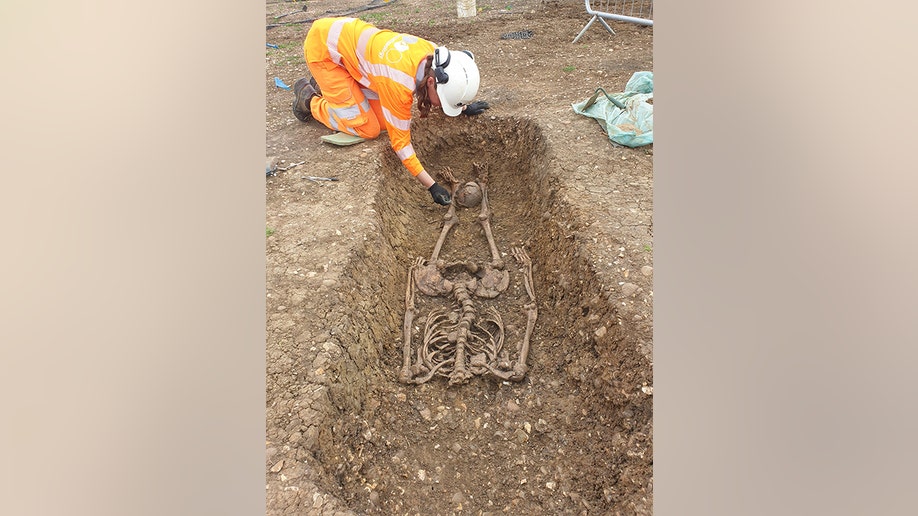
United Kingdom archeologists have announced the discovery of about 40 2,000-year-old decapitated corpses buried in an ancient Roman village unearthed during the construction of the HS2 project, an hour northwest of London.

In addition to the ruins of the village, artifacts and ancient coins, they found burial sites for more than 400 people, about 10% of whom had been decapitated. They could have been outcasts or criminals, according to authorities, but the nature of their beheadings was not fully clear.

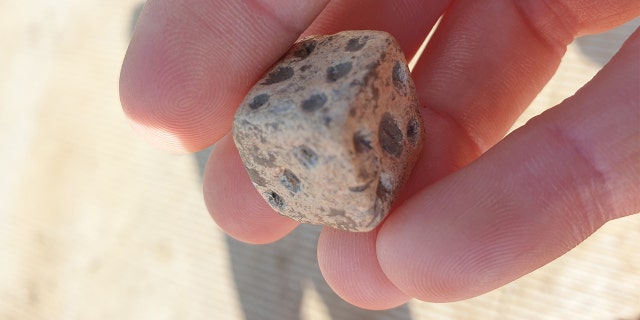
Roman lead die uncovered during archaeological excavations at Fleet Marston, near Aylesbury, Buckinghamshire. Excavations took place during 2021.

Roman lead die uncovered during archaeological excavations at Fleet Marston, near Aylesbury, Buckinghamshire. Excavations took place during 2021. (HS2)

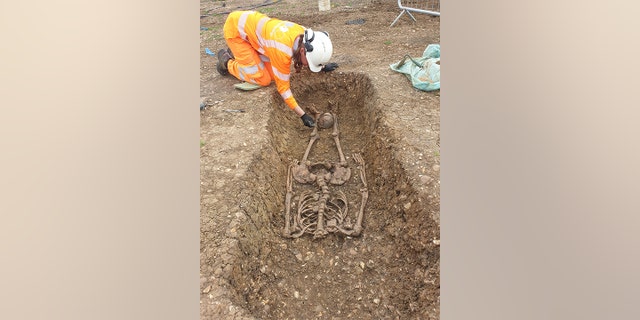
Some of those had their skulls placed between their legs or at their feet, according to the researchers.

“One interpretation of this burial practice is that it could be the burial of criminals or a type of outcast, although decapitation is well-known elsewhere and appears to have been a normal, albeit marginal, burial rite during the late Roman period,” the HS2 said in a statement over the weekend.

Roman skeleton with head placed between legs uncovered during archaeological excavations at Fleet Marston, near Aylesbury, Buckinghamshire. Excavations took place during 2021.

Roman skeleton with head placed between legs uncovered during archaeological excavations at Fleet Marston, near Aylesbury, Buckinghamshire. Excavations took place during 2021. (HS2)

Researchers expect to learn more about Britain’s Roman era and how residents once lived there.

“All human remains uncovered will be treated with dignity, care and respect and our discoveries will be shared with the community,” Helen Wass, HS2 Ltd’s head of heritage. 

Search teams also discovered ancient pottery, an old lead die, as well as other tools and ornaments. 

  • Roman skeleton with head placed between legs uncovered during archaeological excavations at Fleet Marston, near Aylesbury, Buckinghamshire. Excavations took place during 2021. (HS2)

HS2 said that they also found hundreds of ancient coins, suggesting “trade and commerce” in the town, which was situated along a defunct road between the former Roman cities of Verulamium, now St. Albans, and Corinium Dobunnorum, now Cirencester. 

The HS2 rail system is a planned cross-country, high-speed line. Since 2018, HS2 has investigated about 100 archeological sites, including the Fleet Marston village.

A team of over 50 archeologists began excavating the site last year, according to the project organizers.

Climate change activists have protested the rail project, demanding the government halt the construction. Last month, London police evicted a group of them from a city park, where they had set up an encampment to demand an end to the project.

The Associated Press contributed to this report.

Michael Ruiz is a reporter for Fox News Digital. Story tips can be sent to michael.ruiz@fox.com and on Twitter: @mikerreports

Leave a comment

Filed under Humor and Observations, Uncategorized

History of popcorn: Fun facts about the movie theater snack

Americans consume 15 billion quarts of popcorn per year.

Wednesday is National Popcorn Day, and what better way to celebrate than by learning about the history of the delicious snack? 

According to The Popcorn Board, the oldest-known ears of corn that were popped are from about 4,000 years ago and were discovered in current-day New Mexico in 1948 and 1950.  

Meanwhile, History.com reported in 2018 that there were traces of popcorn in 1,000-year-old Peruvian tombs. 

Popcorn was also significant to the Aztec people for eating, ceremonies and decorations, according to The Popcorn Board. 

The snack became a common food in American households by the mid-1800s, according to History.com. Popcorn was popular for late-night snacks by the fire and at picnics, the website reported. 

In the 1890s, Charles Cretors created the first popcorn-popping machine, and by 1900, he created a horse-drawn popcorn wagon, which led to mass consumption of the snack, History.com reported.

Popcorn didn’t hit movie theaters until the Great Depression, according to Smithsonian Magazine. In fact, the movie theaters that started selling popcorn were able to survive the Great Depression, while other movie theaters had to close because of poor sales.

The first microwave popcorn bag was patented by General Mills in 1981, according to History.com.

Today, Americans consume 15 billion quarts of popcorn per year, according to The Popcorn Board. 

Ann W. Schmidt is a lifestyle reporter and editor for Fox News Digital. 

Leave a comment

Filed under Humor and Observations

Yellowstone’s Giantess Geyser erupts for first time in 6 years, roars ‘back to life

The geyser, located in Wyoming, historically erupted two to six times per year

The Giantess Geyser, which is located in Wyoming, historically erupted two to six times per year, according to the National Park Service (NPS).

WOMAN FALLS INTO THERMAL FEATURE AT YELLOWSTONE NATIONAL PARK CLOSED DUE TO THE CORONAVIRUS

Footage from an NPS webcam shows the geyser erupting as parkgoers look on.

The Giantess Geyser at Yellowstone National Park erupted on Tuesday after six and a half years of dormancy.

The Giantess Geyser at Yellowstone National Park erupted on Tuesday after six and a half years of dormancy. (National Park Service)

According to the park service website, “infrequent but violent” eruptions characterize Giantess Geyser.

An eruption from the fountain-type geyser can cause the surrounding area to shake from underground steam explosions just before the initial eruptions.

Eruptions may occur twice hourly, and continue for four to 48 hours, according to the NPS.

When the geyser erupts, it typically shoots a stream that is 100-200 feet high.

The six-year gap between eruptions was the longest since at least the 1980s, but the geyser has had years-long dormant periods before, according to the agency.

“Why geysers turn off and on is something that is not well understood,” the USGS tweeted. “They are very fragile systems.”

Leave a comment

Filed under Humor and Observations

Dinosaur diagnosed with malignant cancer for the first time: researchers say The cancer was found in the leg bone of a Centrosaurus which lived 76 to 77 million years ago

Researchers on Monday announced the discovery and diagnosis of an aggressive type of bone cancer in a dinosaur, making it the first known example of a dinosaur afflicted by malignant cancer, according to a study.

A team of researchers, including David Evans of the Royal Ontario Museum (ROM) and Mark Crowther a hematologist at McMaster University, re-evaluated the bone and determined it was actually osteosarcoma, an aggressive type of bone cancer, according to a study published the journal Lancet Oncology.

“Diagnosis of aggressive cancer like this in dinosaurs has been elusive and requires medical expertise and multiple levels of analysis to properly identify,” Crowther said in a press release by the ROM. “Here, we show the unmistakable signature of advanced bone cancer in 76-million-year-old horned dinosaur — the first of its kind. It’s very exciting.”

Evans said the lower leg bone contained “a massive gnarly tumor larger than an apple.”

The researchers — assembled from a variety of different fields — diagnosed the tumor using high-resolution CT scans, where they observed thin sections under the microscope to assess it at a cellular level.

Most tumors occur in soft tissue that doesn’t willingly fossilize, so there is little evidence of cancer in fossil records, according to Reuters.

The study’s findings could establish links between ancient and modern animals and even help scientists learn more about the evolution and genetics of various diseases.

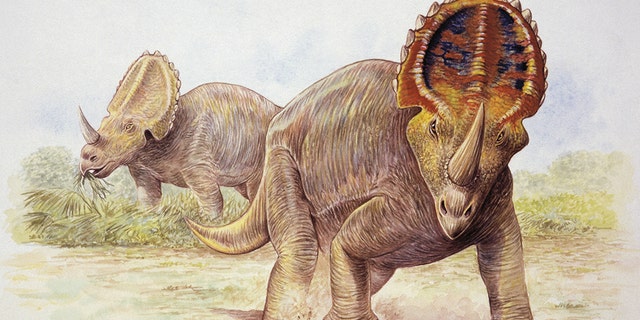
Illustration of two Centrosauruses (Photo by De Agostini via Getty Images/De Agostini via Getty Images)

Illustration of two Centrosauruses (Photo by De Agostini via Getty Images/De Agostini via Getty Images)

“Evidence of many other diseases that we share with dinosaurs and other extinct animals may yet be sitting in museum collections in need of re-examination using modern analytical techniques,” the release said.

Tumors were also found in a dinosaur earlier this year, although a malignant cancer diagnosis has yet to be confirmed.

“This finding speaks to the biology of cancer. It is not something novel or new, but probably has occurred since time immemorial and is an expected complication in all animals,” added Crowther, according to the news organization.

While the Centrosaurus was likely weak from cancer before it died, Evans said the disease may not have killed the dinosaur. The fossil was found in a bonebed containing the remains of hundreds of other Centrosaurus dinosaurs, which suggested that they died in a flood.

“This remarkable find shows that no matter how big or powerful some dinosaurs may seem, they were affected by many of the same diseases we see in humans and other animals today, including cancer,” he added, according to Reuters. “Dinosaurs seem like mythical beasts, but they were living, breathing animals that suffered through horrible injuries and diseases.”

Leave a comment

Filed under Animals, Humor and Observations